Invyt.App Team
November 22, 2026
9 min read
How to host Christmas dinner at home: when to invite, how many you can seat, food per person, dietary needs, who brings what, and a Christmas Day oven plan.
Planning an event?
Invyt handles your RSVPs so you can focus on the celebration — not the spreadsheet.
Try Invyt free →To host Christmas dinner at home, invite people in late November or early December, ask for replies by December 15, and count adults, kids and dietary needs separately. Then buy food per person, start thawing the bird days earlier than you think, and plan the oven backwards from the minute everyone sits down.
The cooking is not what goes wrong. What goes wrong is a headcount that changes on December 23, a vegetarian nobody mentioned, and three potato dishes but no dessert. All three are solved before you shop.
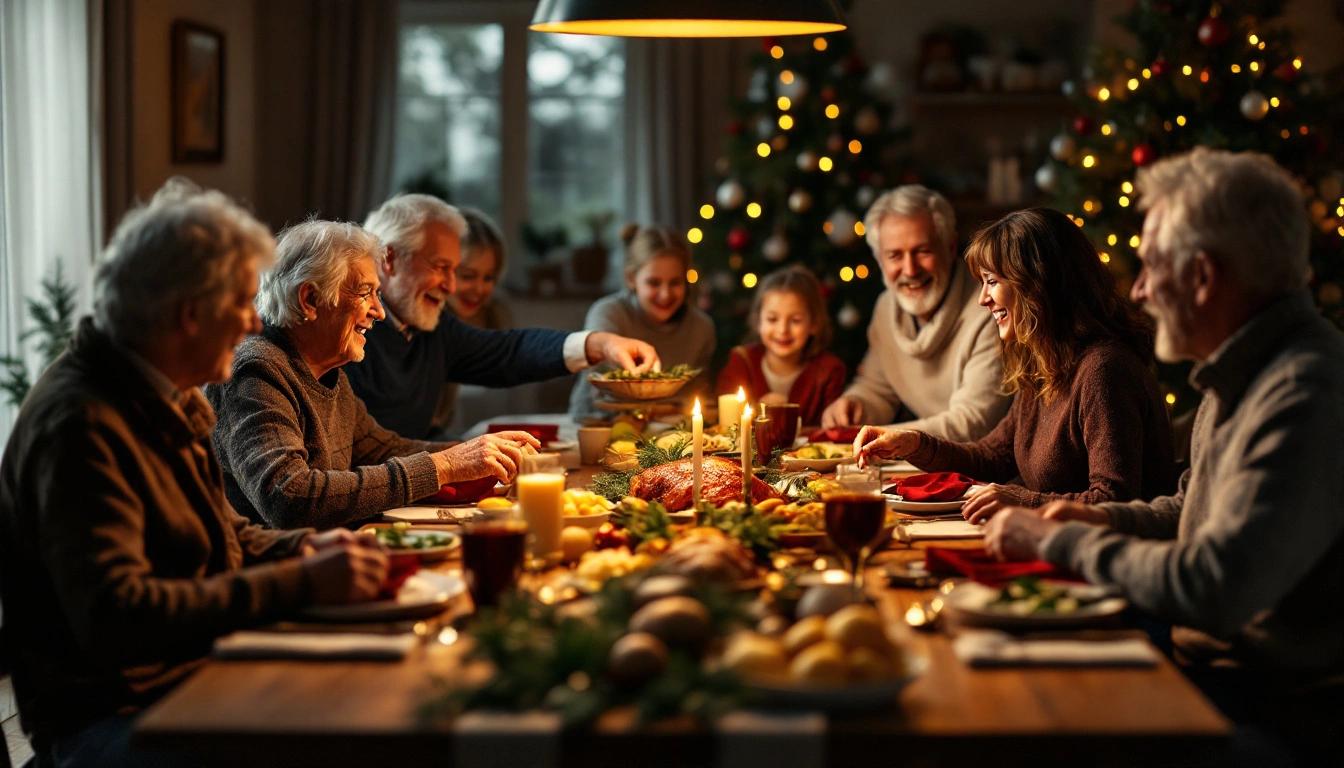
Christmas dinner is the main meal of December 24 or 25, usually a roast with sides and dessert, served at home for family and close friends. Most home hosts cook for 6 to 16 people around one table, sometimes with a second table for the kids.
Short version: send one invitation with a sit-down time and a reply-by date, ask about kids and dietary needs in the reply, let guests pick what they bring, and write your oven schedule on December 23.

Invite by the first week of December. Families split Christmas between two or three homes, and those negotiations start early. The host who asks first gets a clear answer, and the host who asks on December 18 gets "we'll try to pop in."
Why December 15? It is late enough that people know their plans and early enough to change the size of the roast. The Christmas party RSVP guide explains how to set the deadline and chase late replies without sounding pushy.
Count chairs and table length before you count relatives. Each adult needs about 60 cm (24 inches) of table edge to eat comfortably. A standard 180 cm (6 ft) table seats six, or eight if two people sit at the ends.
Past that, you have three options. Add a second table at the same height and cover both with one long cloth. Set a kids table close enough that parents can reach it. Or serve buffet style and let people eat on the sofa, which works for 20 but loses the feeling of one shared meal.
Then plan for the guests who do not answer. In Greenvelope's RSVP benchmark, events with 10 to 25 guests had a median response rate of 78.6%. On a family list of 15, three people never reply. With family, most of them come anyway, so set one extra place and keep a folding chair in reach.
Five things: the day, the arrival time and the sit-down time, whether kids are welcome, dietary needs, and the reply-by date. The sit-down time is the one most hosts leave out, and it is the reason dinner goes cold while someone's cousin is still parking.
"Christmas dinner at ours, December 25. Come from 1 pm, we sit down at 2:30. Kids very welcome. Tell us about any dietary needs when you reply, and let us know by December 15."
If you want more versions, including a Christmas Eve dinner and a potluck, the Christmas party invitation wording post has 40 to copy.
Send it where your family already talks. A link in the family WhatsApp group gets more answers than a long message, because each person replies in their own time and you see one list. The Christmas party invitations page shows how one link collects every yes, plus-one, child and dietary note together.
Plan per adult, then count each child under ten as half. These are rules of thumb for a meal with three or four sides and dessert.
The thaw is where Christmas dinner really starts. The USDA says a frozen turkey needs 24 hours in the fridge for every 4 to 5 pounds. A 16 lb (7 kg) bird takes four days. For a Christmas Day dinner, it goes into the fridge on December 21, not on Christmas Eve. Clear a fridge shelf for it before you buy.
Ask early, then cook one meal that most people can eat, plus one main that covers the rest.
When guests reply on Invyt, they can pick vegetarian, vegan or gluten-free, or write a note for anything else, like a nut allergy or no pork. You see each note next to the guest's name. That turns "is your new partner still vegetarian?" from a December 24 phone call into a line you read on the 15th.
What works in practice:
Let guests pick one category when they say yes. On Invyt you can add one choice question to the invitation, such as "What will you bring?" with options like side, dessert, drinks and bread. Only guests who accept see it, and your guest list counts how many picked each one. If four people chose dessert and nobody chose drinks, you see it in time to ask.
Keep the main dish and the gravy for yourself. Those two are the meal, and if a guest cancels on Christmas Eve, dinner still happens. Ask anyone bringing a hot dish to bring it ready to serve, because your oven is full.

Work backwards from the sit-down time. Write the plan on December 23 and tape it inside a cupboard door. Here is an example for a 6 kg (13 lb) turkey and a 2:30 pm sit-down:
The rest is the trick most first-time hosts miss. A whole bird stays hot under foil for an hour, and that hour is your oven space for everything else.
Someone will. Illness, a snowed-in road or a family argument somewhere else. With a firm list from December 15, one or two cancellations only mean more leftovers.
Three things help. Keep the guest list current, so you know the real number when you set the table. Plate a portion for the person who cannot come and drop it off on December 26. And if the cancellation leaves a gap, a neighbour or friend who is alone at Christmas is often glad of a late invitation.
The calm Christmas host is not the one with the most dishes. It is the one who knew on December 15 how many adults and kids were coming, who eats what, and who brings dessert.
If you are hosting the New Year too, the New Year's Eve party guide uses the same reply-by approach for December 31.
Invyt shows who hasn't answered and opens WhatsApp with the reminder already written, so you send it from your own phone in one tap. It is free up to 25 guests per event, then a one-time upgrade for that event. Guests reply without an app or an account. Create your Christmas dinner invitation and get the headcount before you buy the turkey.
Most families sit down between 2 and 5 pm. An afternoon meal gives the host the morning to cook, lets children eat before they get tired, and leaves the evening free for games or a walk. If guests are driving in from far away or spending the morning with other family, 5 or 6 pm works better. Put the sit-down time on the invitation, not only the arrival time.
Traditionally yes, but many families now share the cost. The easiest way is to ask each guest to bring one part of the meal, such as a side, a dessert or the wine, while the host covers the main dish. If you would rather ask for money, say so in the invitation with a clear amount per adult, so nobody is surprised at the table.
Refrigerate them within two hours of serving and eat them within three to four days. Carve the meat off the bone before it goes into the fridge, since a whole bird cools too slowly. Keep a stack of takeaway boxes ready and send guests home with a plate, which clears your fridge and saves you a week of turkey sandwiches.
Put the host closest to the kitchen and the people who need help, such as grandparents or small children, near an exit or a parent. Split up couples only if your family likes it. Place cards are worth the five minutes for groups over ten, because they stop the awkward hover around the table when the food is going cold.
A Christmas party RSVP works when you ask for a yes or no by a fixed date, count adults, kids and diets separately, and chase the silent guests twice. Here are the 2026 dates and the math.
40 Christmas party invitation messages to copy, from the group-chat one-liner to Secret Santa rules, ugly sweater dares and an office invite that works for everyone, plus 2026 send dates.
Plan a New Year's Eve party at home in six weeks: invite early, lock a headcount by December 22, split the food with one question, and time midnight off a clock, not a stream.
Join thousands of event organizers who trust Invyt for seamless guest list management
Get Started Free