Indian Wedding RSVP Guide: How to Handle 5 Ceremonies
Manage RSVPs for Haldi, Mehndi, Sangeet, ceremony, and reception without chaos. Step-by-step guide for Indian wedding guest list management.

Planning an event?
Invyt handles your RSVPs so you can focus on the celebration — not the spreadsheet.
Try Invyt free →Indian weddings don't have an RSVP problem — they have five. One for the Haldi, one for the Mehndi, one for the Sangeet, one for the ceremony, one for the reception. Each with a different guest list, a different headcount, and a rotating cast of family members who somehow haven't confirmed yet.
This guide covers how to build a system that actually works: how to structure your guest list, when to send each invitation, and why treating every ceremony as its own event (rather than asking for one blanket yes/no) will save you from catering disasters and seating chaos.
Why Standard Wedding RSVPs Break Down for Indian Weddings
Most wedding RSVP tools were designed with one ceremony in mind: ceremony plus reception, maybe a rehearsal dinner. The RSVP is binary. You're coming or you're not.
Indian weddings don't work that way. A typical five-event wedding might look like:
- Haldi: 40-60 people (immediate family, closest friends only)
- Mehndi: 80-150 (extended family, traditionally women-focused)
- Sangeet: 150-250 (wider family, college friends, family friends)
- Wedding ceremony: 200-400 (full guest list)
- Reception: 300-500 (everyone plus work colleagues, neighbors)
These aren't the same 300 people showing up five times. They're overlapping circles: some guests only attend the Sangeet, others are there for all five events, and your great-aunt from Ahmedabad is flying in for the ceremony but leaving before the reception.
Asking everyone "are you coming to the wedding?" gets you exactly nothing useful for catering the Mehndi. You need per-event confirmation, and that requires a fundamentally different approach to RSVPs.
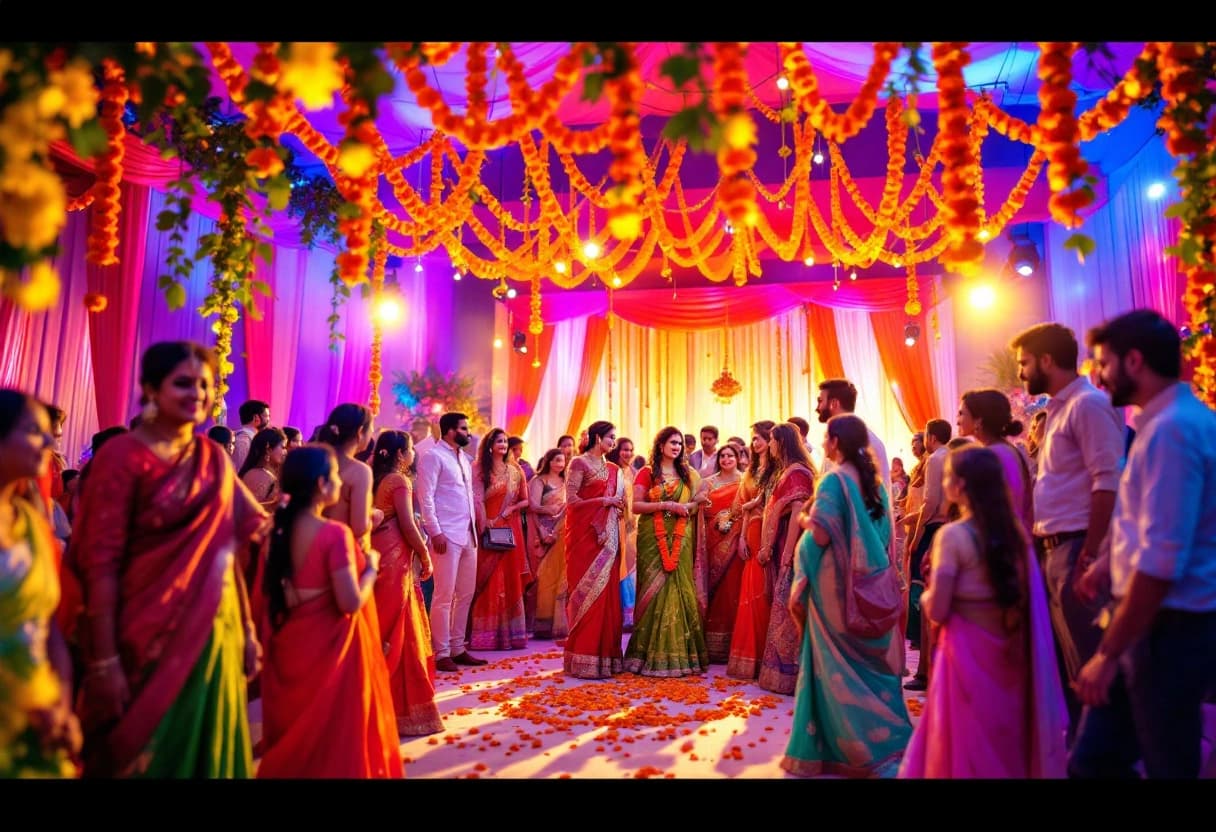
Build One Master Guest List First
The instinct is to create a separate spreadsheet per event. This leads to five disconnected lists, conflicting headcounts, and the inevitable "I thought you added them to the Sangeet list" conversation at 11pm the week before.
Build one master list first. Columns: name, relationship, contact (phone number, not email), language preference (English, Hindi, Gujarati, Punjabi, whatever's relevant), and one column per event.
Each cell is simply: Invited / Confirmed / Declined / Pending.
This structure lets you answer any catering question in seconds. It also shows you the full picture at a glance: who's confirmed for the ceremony but hasn't responded for the reception, who's coming from abroad and needs accommodation across multiple nights, who has dietary restrictions that apply to all five events.
A spreadsheet works for lists under 100 people. For larger weddings, the limits appear fast: no automated reminders, no per-event RSVP links, no headcount tracking without manually counting cells — see how to track RSVPs online without a spreadsheet for what replaces each of those columns. Tools like Invyt's Indian wedding RSVP hub let you create each ceremony as a separate event and track RSVPs across all of them in one dashboard, with headcounts updating live as guests confirm.
Segment Your Guest List by Ceremony
Not everyone gets invited to everything. The trickier part is communicating this without creating family drama.
Common segmentation logic for diaspora families:
Haldi: Immediate family and childhood close friends only. If it's at your parents' home, the venue makes the decision for you. There's a natural capacity limit and no awkward explanation required.
Mehndi: Extended family on the bride's side plus close friends. Traditionally women-focused in many North Indian families, though this varies significantly. The invitation list here often runs through the bride's mother.
Sangeet: The first big event. All family, close friends, college friends, family friends. If someone doesn't make the Sangeet, they're probably not on the ceremony list either.
Ceremony and Reception: Full guest list.
For guests traveling from abroad, a practical convention: anyone flying in specifically for the wedding gets invited to all events taking place locally. For guests based in India attending a UK/US/Canada wedding, only the ceremony and reception get a formal invitation unless the family has discussed otherwise.
This isn't a rule. Some families invert it entirely. The point is to decide your policy before building the list, not halfway through when you're already managing five WhatsApp groups and someone's father has called to ask why he wasn't invited to the Sangeet.
One RSVP Per Event, or One Multi-Event Form?
Two approaches, each with a genuine use case.
Separate RSVPs per event. Each ceremony has its own RSVP link, sent to the relevant guests at the appropriate time. Guests only receive the link for events they're invited to, which elegantly sidesteps the "am I invited to the Haldi?" question. If you didn't get the link, that's your answer.
One multi-event RSVP. Guests see a single RSVP page listing every event they're invited to and confirm attendance event by event. Cleaner for guests attending multiple ceremonies; avoids five separate messages arriving over five weeks.
For most weddings over 150 guests, the multi-event form is less chaotic. You send one invitation, guests confirm once, and you get structured per-event data. Invyt supports this format natively: guests see only the ceremonies they're invited to, confirm per event, and per-event headcounts update in real time in the dashboard.
The one case where separate links work better: when you want the Haldi and Mehndi to feel genuinely private, not just access-controlled. A shared form, even with invitee restrictions, can prompt questions from guests who only see two events listed when they expected five.
Why WhatsApp Beats Email for Indian Wedding RSVPs
Email open rates for wedding RSVPs among Indian diaspora families hover around 40-50%. WhatsApp open rates: closer to 98%.
For most families, WhatsApp is where family news lives — announcements, celebrations, photos, check-ins. Your aunties are not monitoring their inboxes. Your parents' friends will not fill out a form from a sender they don't immediately recognize.
The workflow that actually works: share the RSVP link via individual WhatsApp message (not a group message, since group notifications get muted or ignored), follow up with a voice call for anyone who hasn't confirmed after two weeks, and send a final WhatsApp reminder a week before your deadline with venue details for confirmed guests.
For pre-ceremony event wording that works in both English and transliterated Hindi, the Hindu wedding invitation wording guide covers ceremony-specific language you can adapt for WhatsApp messages, from formal Sangeet invitations to the casual "wear yellow, you're getting turmeric on you" Haldi note.
Timing: When to Send RSVPs for Each Event
Indian weddings typically have longer planning windows than Western weddings, partly because of international travel logistics and partly because finding the right muhurta dates takes time. Use that lead time deliberately.
Set your RSVP deadline 3 weeks before each event, not the day before. Catering minimums need confirmation lead time, seating arrangements take multiple evenings to finalize, and chasing the last 20 non-responders is a ritual that happens regardless of how much notice you gave. Build in the buffer.
For a full timeline covering vendor booking, ceremony sequence, and the tasks that tend to get missed in months 6-12, the Indian wedding planning checklist covers the full arc from first decisions through final week.
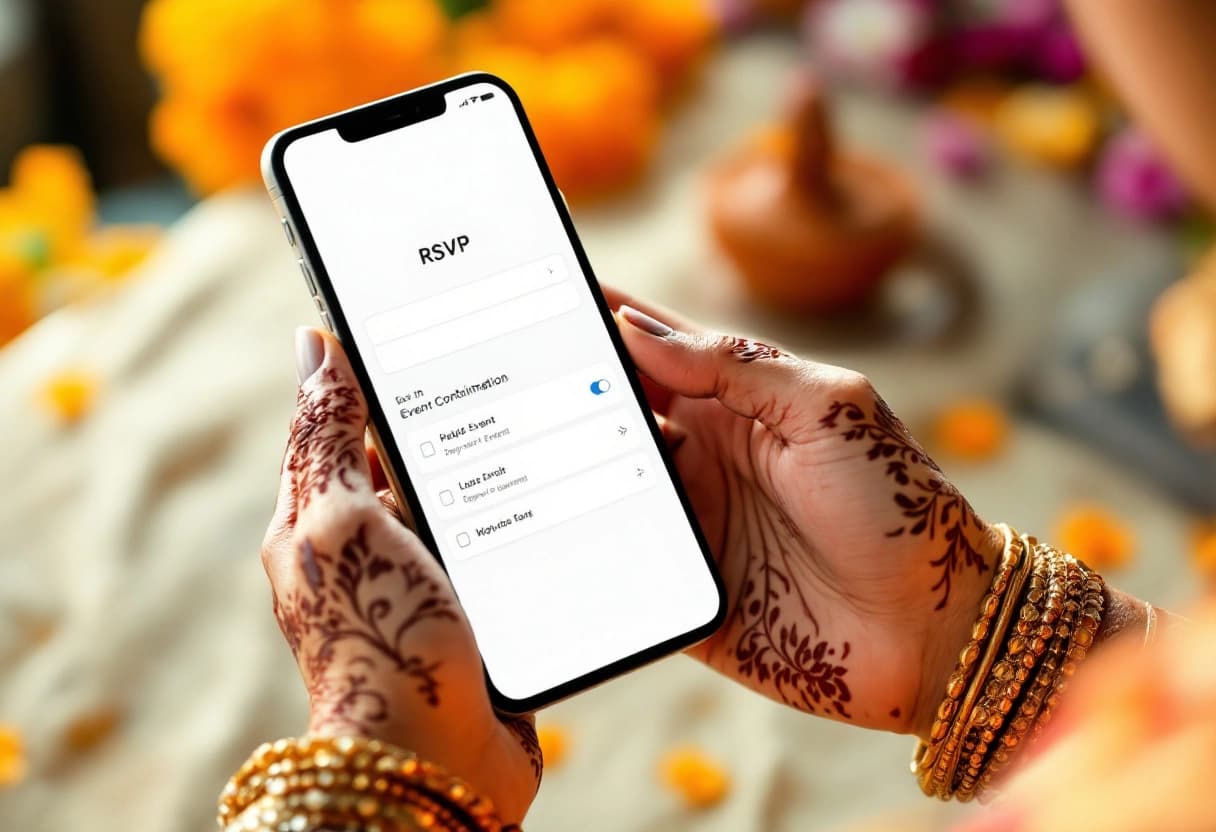
Managing Dietary Restrictions Across Events
This is where multi-event RSVP management earns its value. Dietary requirements aren't static across events. A guest might eat from the community kitchen at the ceremony but needs a gluten-free option at the reception where catering is handled by a different vendor. Caterers change. Menus change.
Collect dietary information once, at the guest level, not per event. Then generate per-event breakdowns when communicating with each caterer: "Reception: 22 vegetarian, 5 vegan, 7 gluten-free, 4 nut allergy." You don't want to re-collect this information five times, and guests definitely don't want to enter it five times.
If your RSVP tool doesn't support per-guest dietary fields, a single supplementary question at initial confirmation works. Just make sure whoever handles catering communication has direct access to the raw responses, not just headcount totals.
After RSVPs Close: What to Expect
Two weeks before your first event, a percentage of guests will not have confirmed. This is normal, and worth understanding before deciding how hard to chase.
Indian wedding RSVP culture, particularly among older family members, has different norms around commitment than Western wedding planning assumes. "We'll be there" said on a call often substitutes for a formal digital confirmation. Some guests consider a WhatsApp message to the bride's mother to be a sufficient RSVP, regardless of whether they clicked a link.
The practical response: accept verbal and WhatsApp confirmations as confirmed when they come through directly. Then use the digital RSVP data for vendor minimums and table counts, not as a perfect attendance record.
For headcount purposes, plan for 5-10% of confirmed guests not showing up (work conflicts, last-minute travel issues) and 3-7% of unconfirmed guests arriving anyway (family you knew would come). Both buffers matter for different reasons: catering minimums require the first, seating arrangements require the second.
For broader guest list strategy, including managing plus-ones, handling declines, and organizing post-event tracking, wedding guest list management covers the full process from creation through post-wedding thank-you list.
Frequently Asked Questions
How do you manage RSVPs for an Indian wedding with multiple ceremonies?
Build one master guest list with a column per ceremony. Then use a multi-event RSVP tool where guests confirm per event in a single form, or send separate RSVP links per ceremony. Track headcounts at the event level, not just per person. This gives you the per-ceremony data catering and venues actually need, not one number that tells you nothing specific.
Do all guests get invited to every Indian wedding ceremony?
No. Most Indian weddings have distinct guest lists per event. The Haldi is typically 40-60 close family members; the Sangeet may have 150-250; the ceremony and reception are the largest. Guests generally understand this, especially in diaspora communities. The key is communicating invitations in a way that makes who's invited to what clear. Per-event RSVP links or a multi-event form with access controls both handle this cleanly.
Should I use email or WhatsApp to send Indian wedding RSVPs?
WhatsApp. Open and response rates are dramatically higher than email for most Indian families. Send the RSVP link directly in a WhatsApp message, follow up with a call for guests who haven't responded after two weeks, and send event reminders the same way. If your RSVP tool generates a shareable WhatsApp message, use it. Removing the friction of drafting something custom for 300 people makes a real difference.
How far in advance should you send RSVPs for Indian wedding ceremonies?
For overseas guests: save-the-date 6-8 months out. Ceremony and reception formal invitations: 6-8 weeks before. Sangeet and Mehndi: 4-6 weeks. Haldi: 2-3 weeks (short notice is normal for intimate events). Set your RSVP deadline 3 weeks before each event to give you time for catering confirmation, seating, and the inevitable follow-up calls.
How do you handle dietary restrictions across multiple Indian wedding ceremonies?
Collect dietary information once per guest at RSVP time, then generate per-event reports for each caterer. Storing requirements at the guest level means you never re-collect data and guests never re-enter it. When sharing with caterers, provide the specific breakdown for their event only ("Sangeet: 18 vegetarian, 3 vegan, 4 gluten-free") rather than the full guest file.