Free RSVP Apps: Do Guests Have to Download One?
Almost no free RSVP app asks guests to install anything. Here's how the phone side really works, and which options hold up for hosts on mobile.

Planning an event?
Invyt handles your RSVPs so you can focus on the celebration — not the spreadsheet.
Try Invyt free →Almost every "RSVP app" is a web app. Your guests do not download anything: you send a link by text, WhatsApp or email, they tap it, and the RSVP page opens in the browser they already have. The best free ones in 2026 are Invyt for multi-event weddings, Partiful for casual parties, Luma for community events, and Joy for traditional weddings.
That first sentence answers the question most people are actually asking when they search for a free RSVP app. They picture an install, an account, an elderly relative giving up halfway through. None of that happens. The whole category runs on a link.
Which is good news, because 91% of U.S. adults own a smartphone according to Pew Research Center, and mobile is now 52.57% of web traffic worldwide as of July 2026. Your guest list is already carrying the only device it needs. The question is not whether they can use an app. It is whether the page they land on was built for a phone or squeezed onto one.
What Actually Counts as an RSVP App
An RSVP app is a tool that hosts your event page, collects guest responses through a shareable link, and keeps a running tally of who is coming. That definition covers products people also call RSVP software, an RSVP platform, an online RSVP system or a guest list app. Same job, different vocabulary.
The word "app" causes the confusion because it now means two very different things:
- A web app. Runs at a URL in Safari or Chrome. Nothing to install. This is what Invyt, Partiful, Luma, Joy, Evite, RSVPify and Google Forms all are.
- A native app. Downloaded from the App Store or Google Play, installed on the phone, has an icon. Rare in this category, and where it exists it is usually a host-side companion, not something guests touch.
If you want the full feature-by-feature breakdown across the whole category, our comparison of free online RSVP tools is the deeper hub for that. This article is narrower: it is about the app question specifically, and what changes on a phone.
Do Guests Need to Download Anything? No, and That Is the Point
Nobody installs an app to attend your cousin's wedding. Ask a hundred people to download something and you will lose a meaningful chunk of them at the app store, and another chunk at the account signup screen behind it.
Link-based RSVP survives that because it removes every step between "I got the invitation" and "I answered it." The flow is: tap link, see event page, choose yes or no, done. Roughly fifteen seconds, no password.
This matters most for the guests you are most worried about. The 78-year-old grandmother who will not create an account is the same person who can tap a blue link in a text message. That is the whole reason the category settled on web apps rather than native ones.
One caveat worth knowing before you commit: a browser-based RSVP needs a connection at the moment the guest responds. That is fine for RSVPs collected weeks ahead. It is a real problem if you were planning to have people RSVP at the door of a venue with one bar of signal.
Native App vs Web App: What You Actually Give Up
Web apps win on reach, but they are not free of trade-offs. Three things get harder without an installed app.
Push notifications. A web app cannot reliably ping your phone when a guest replies. Free RSVP tools work around this with email digests, which is fine but slower. If a tool promises push alerts without shipping a real installed app, be skeptical.
Offline access. No connection, no data. Export or print your final list before the event rather than assuming you can pull it up at the venue.
Door check-in. Scanning arriving guests is the one job that really benefits from a native app, because it wants the camera and it wants to keep working when the venue Wi-Fi buckles. Luma handles QR check-in well within its web flow. Most personal-event tools do not do check-in at all.
Against those three, the web app gains something bigger: your guest list does not have to do anything. For a one-time event, that trade is not close.
The Free RSVP Apps Worth Considering
All of these are free to start and all of them work in a guest's browser. What separates them on a phone is where the differences show up.
Invyt is the strongest free option if your event has more than one part. A wedding with a mehndi, a ceremony and a reception is three different guest lists, and Invyt lets a guest confirm each one from a single link while the host watches one combined headcount. The share flow is built around WhatsApp and your phone's native share sheet rather than email, which is the right assumption for families spread across countries. If most of your invitations go out in group chats, sending digital invitations over WhatsApp covers the mechanics of that.
Partiful has the best pure mobile feel of anything here. It reads like a social app, guests can see who else is going, and the whole create-and-share loop takes about two minutes. It is also unmistakably built for house parties. No dietary fields, no multi-event structure, no bilingual pages.
Luma is the only one on this list with real door check-in on the free tier, and it stays free at real scale. It is aimed at meetups and community nights rather than personal celebrations, so the page reads as "event listing" rather than "you are invited."
Joy gives couples a free wedding website with RSVP attached, and its name-lookup RSVP is smart on mobile. It is wedding-only, and multi-day celebrations get awkward past a ceremony and reception.
Evite carries the most name recognition and the biggest free-tier compromise: ads sit on the same page as your event details. On a phone, where the screen is small, those ads take proportionally more of the invitation than they do on a laptop.
RSVPify offers the deepest form logic of the group, and stops hard at 100 guests and one event on the free plan.
Google Forms is on this list only because people use it. It is a form. It collects answers and hands you a spreadsheet, and you become the tracker. If that is where you are right now, tracking RSVPs without a spreadsheet is the shortest path out.
The Host Side Is Where an App Earns Its Keep
Guests spend fifteen seconds in an RSVP app. Hosts spend three months in one. That asymmetry is the thing most roundups miss, and it is the actual reason to care which tool you pick.
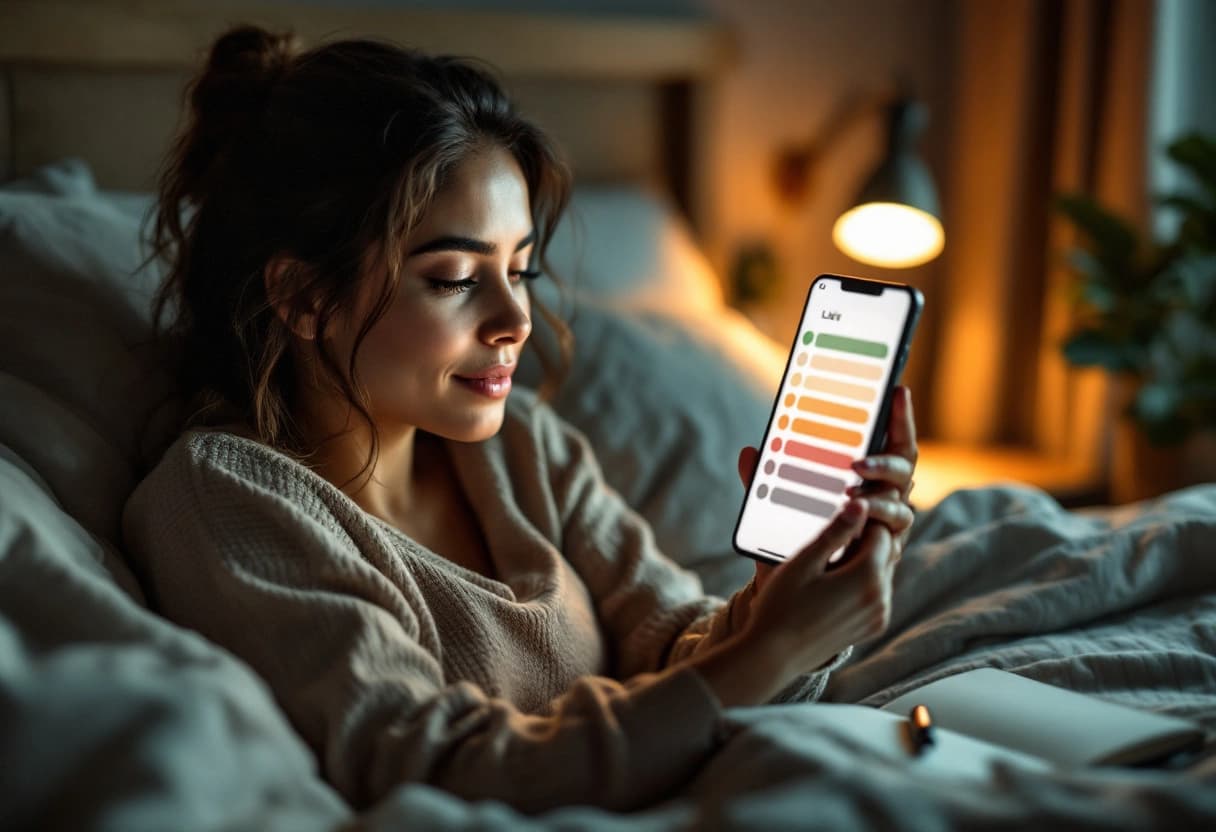
On a phone, a good host dashboard shows you four things without pinching or scrolling sideways:
- Live status split into accepted, declined and pending, updating the moment somebody taps.
- A real headcount that already includes plus-ones and children, not a count of "yes" clicks.
- Dietary and meal notes attached to each guest, captured at RSVP time rather than chased later.
- Who has not answered, which is the single most useful screen in the whole product and the one Google Forms cannot give you.
The Knot's 2025 Real Weddings Study, drawn from nearly 17,000 U.S. couples married in 2024, puts the average couple at 116 guests invited. That is roughly 116 rows you will check from a phone, in bed, at 11pm, more times than you expect. Invyt's free RSVP tracker and the wedding-specific wedding RSVP tracker are both built for that screen first. If you are still assembling the list itself, our guest list management guide covers the groundwork.
Why You Cannot Find These in the App Store
Search "RSVP app" in the App Store and you get a mix of paid utilities, abandoned projects and things unrelated to your event. The tools people actually recommend are mostly absent.
They are not missing. They deliberately never shipped there, for three reasons that all favor you:
- App review adds weeks to every change. A web app updates the moment it is deployed.
- An install is a conversion cliff. Every install step loses guests, and an RSVP tool whose guests bounce is worthless.
- One codebase reaches everything. A link works on an iPhone, a five-year-old Android, a work laptop and a library computer with no per-platform work.
So if a tool has no app store listing, that is not a red flag. Check whether the RSVP page works well on a phone instead. Open the link on your own device before you send it to 116 people.
How to Pick in Under a Minute
Your event has multiple parts. Invyt. Nothing else free tracks separate guest lists per event from one link.
You are throwing a party for friends. Partiful.
You are running a meetup or need check-in at the door. Luma.
You want a wedding website and registry bundled in. Joy.
You need conditional form logic and have under 100 guests. RSVPify.
You only need a headcount and do not care how the invitation looks. Google Forms.
Whichever you choose, do one test before you send anything: open your own event link on your phone, in the browser you would use, and RSVP to your own event. Half the tools in this category look fine on a laptop and cramped on a phone, and you will only find out by looking.
Create your free RSVP page on Invyt. No download for you, none for your guests.
Frequently Asked Questions
Is there a free RSVP app that guests don't have to download?
Yes, and that describes almost all of them. Invyt, Partiful, Luma, Joy and Evite are web apps: you send a link, the guest taps it, and the RSVP page opens in their existing browser. No install, no app store, no account. Only door check-in tools tend to need a real installed app, and only for the host.
Are RSVP apps on the App Store or Google Play?
A few publish a host-side companion app, but the RSVP page your guests use is a web page in every popular free tool. If you search an app store for a specific product and find nothing, the tool is not missing. It simply runs in the browser, which is why guests never need to install it.
What is the best free RSVP app for a wedding?
For a wedding with more than one event, Invyt is the strongest free choice because guests RSVP to each event separately from a single link and the host sees one combined headcount. For a traditional single-ceremony wedding that also needs a website and registry, Joy covers more ground in one place.
Can guests RSVP from a phone without an internet connection?
No. Every browser-based RSVP app needs a connection to record the response. If your venue has poor signal, collect RSVPs in advance rather than at the door, and export or print your final guest list before the event so you have an offline copy to work from.
Do free RSVP apps send push notifications?
Rarely, because push notifications require an installed app. Free RSVP tools notify you by email instead, and some send guest reminders by email or SMS. Treat any promise of push alerts with suspicion unless the tool actually ships a native app you install on your phone.