Invyt.App Team
May 15, 2026
8 min read
Wedding invitation etiquette in 2026: when to send, how to address, RSVP rules, and whether digital invites are truly acceptable. Clear rules, real examples.
Planning your wedding?
Invyt makes RSVP management easy — track guests, dietary needs, and plus-ones all in one place.
Try Invyt free →Wedding invitation etiquette in 2026 is simpler than most wedding blogs make it sound. A handful of rules genuinely matter: timing, addressing, and RSVP structure. The rest are traditions you can adapt to fit your wedding.
This guide covers what actually matters: when to send invitations, how to address them correctly, what to include, how to handle RSVPs like a host, and whether digital invitations are genuinely acceptable (they are). Skip the rules that don't apply to your situation and apply the ones that do.
The standard timeline:
The reasoning is practical, not ceremonial. Guests need enough time to request time off work, book travel, arrange childcare, and buy a gift. Six weeks is the baseline for a local wedding where most guests have already been mentally saving the date. For anything requiring flights or hotels, double that.
Your RSVP deadline should land 3–4 weeks before the wedding. Caterers typically need a final headcount 1–2 weeks out, venues need a room setup number, and you need a few days to chase anyone who hasn't responded. Set the deadline on a specific date and put it clearly on the invitation. "Kindly reply by June 1" beats "RSVP requested" with nothing concrete.
For wedding invitation wording that fits your specific formality level, including how to phrase the response line, that guide has 60+ examples ready to copy.
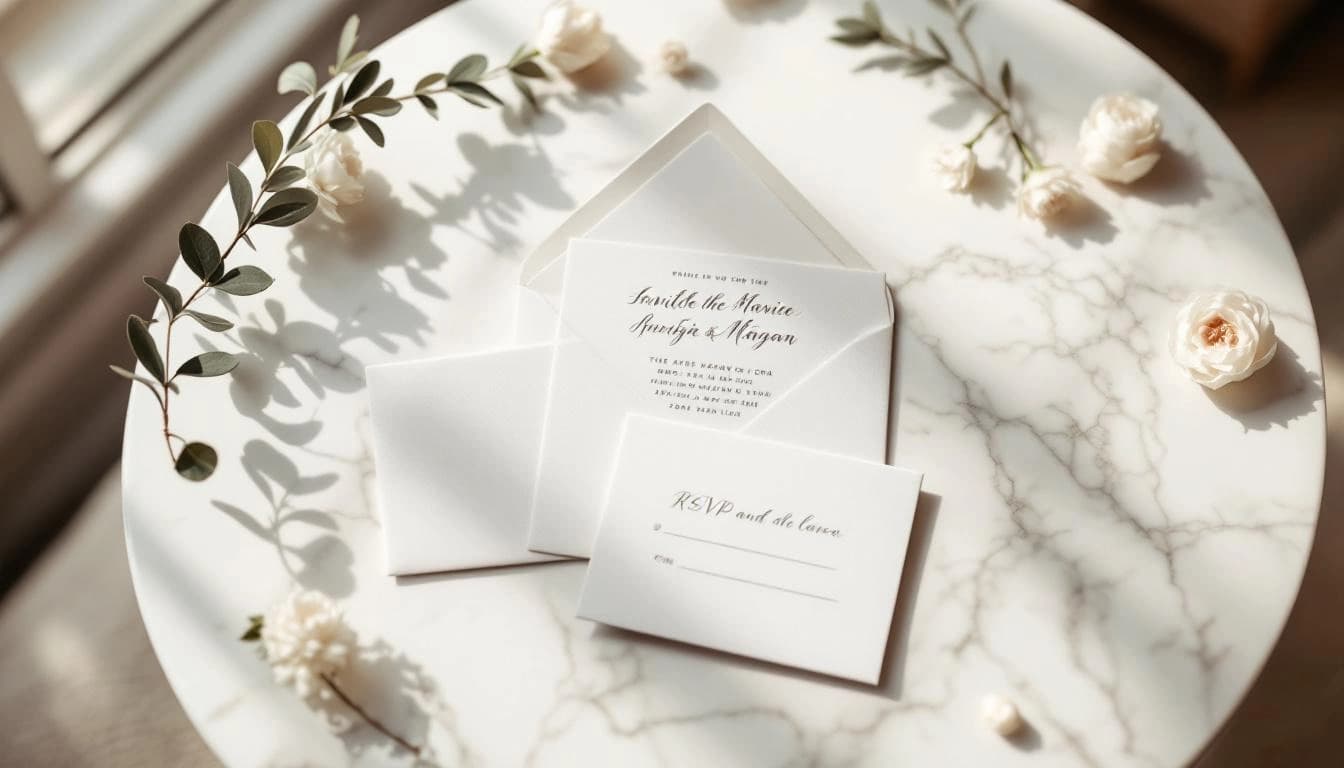
A complete invitation includes six elements:
What does not belong on the invitation: registry information. This is one of the few etiquette rules with near-universal consensus. Guests find registries through family or your wedding website. Putting it on the invitation implies the gift is the point of the invitation.
Dress code can appear at the bottom of the invitation or on an enclosure card. "Black tie," "cocktail attire," or "casual" — state it plainly. Ambiguous codes like "garden chic" require a translation on your wedding website.
Addressing correctly matters more than most couples realize. A misaddressed invitation signals whether a guest's partner is truly invited, whether their kids are included, and whether you know their name correctly. Get it wrong and you'll be fielding "wait, is my boyfriend invited?" texts.
Singles: Address to that person only. Don't include "and Guest" unless you're extending a plus-one. If you are, write "[Name] and Guest."
Married couples, same last name: "Mr. and Mrs. James and Claire Ortega" or simply "The Ortega Family."
Married couples, different last names: List both names, connected with "and." Put the name of whoever you know better first, or go alphabetical.
Unmarried couples living together: Both names on the same line if the space fits, or two lines if not.
Families with children: "Mr. and Mrs. David Kim and Family" works for families with young children. For more formal invitations, list each child by first name on the line below the parents' names. Only include children on the inner envelope whose names appear on the outer envelope. That's how you signal which kids are invited.
Adults-only signal: Address envelopes exclusively to the adults you're inviting. If David and Sarah Kim have kids but you're not inviting children, address it only to them. You can add a line on your wedding website explaining the adults-only policy. Putting "adults only" on the invitation itself is considered impolite.
Digital invitations are fully acceptable for weddings of any formality level. About 60% of couples now use some form of digital RSVP or digital invitation, according to 2023 industry data, and the share is growing. The stigma that digital means cheap is effectively gone. Paperless Post, Zola, and similar platforms have raised the design bar considerably.
A few things still apply:
Design quality signals formality, not the medium. A beautifully designed digital invitation with the correct wording reads as formal as an engraved paper card. A bare-text email does not.
Mobile-first matters. Most guests will open your invitation on their phone. If the layout collapses or the text runs off the screen, it undermines the impression. Test on mobile before sending.
Offer a paper option for elderly guests. If you have older relatives who don't use smartphones or email reliably, send them a physical card. It takes 20 minutes and prevents a week of follow-up phone calls. Some couples send paper invitations to grandparents and close family regardless, as a gesture.
Timing rules don't change. Digital invitations go out on the same schedule as paper ones. Sending digitally doesn't mean you can push the timeline because "it's easier."
For a deeper look at the full decision (paper vs. digital, hybrid approaches, platform comparisons), digital wedding invitations guide covers each option in detail.
Setting up your RSVP system is where invitation etiquette meets logistics. Three things to get right:
Give guests a clear method. A single method is better than multiple. If you're using an online RSVP page, link to it on the invitation or include a QR code (here's how to create one for a wedding RSVP). If you're using paper RSVP cards, include a pre-addressed, stamped envelope. Don't ask guests to RSVP "via the website or the card or just text us." Ambiguity delays responses.
Include meal choices if relevant. If your venue needs per-guest meal selections, include the options on the RSVP card. Three choices is the practical limit. More than that and response rates drop as guests delay to "think about it." It is worth reading the card from the other side too, since a guide to replying to a wedding invitation properly makes it obvious which of your fields will get left blank.
Track responses in one place. Once invitations go out, responses will arrive across different channels: card, email, Instagram DM from a cousin, a text from your mum. Tools like Invyt consolidate these into a single guest list where you can see who's confirmed, who's declined, and who hasn't responded yet. That last group is the one you'll need to follow up with.

Most couples underestimate this. On a 150-person guest list, 15–25% typically need a follow-up reminder after the RSVP deadline.
Wait 2–3 days after your deadline, then follow up personally. A phone call or text works better than email. Keep it light: "Hey, just checking in. We haven't received your RSVP yet and wanted to make sure you got the invitation." Most non-responses are forgetfulness, not reluctance.
The key is knowing who to call. A good RSVP tracking tool shows you the non-responders instantly (no cross-referencing your guest list against a stack of returned cards). Getting guests to RSVP on time has a full breakdown of follow-up scripts and timing, if you want to prepare ahead.
For anyone who still hasn't responded after your follow-up: count them as not attending for catering purposes, but keep a small buffer in your venue count in case a few late confirmations come in. Most venues accommodate minor adjustments within 48–72 hours of the event.
The rule for guests is simple: respond by the deadline. That's it.
If you're a guest who can't make it, decline promptly. The couple needs that slot. If something changes after you've accepted, notify them as soon as possible so they have time to adjust the headcount.
If you've accepted and now need to bring a plus-one who wasn't on the original invitation, ask the couple directly rather than assuming. They may have a capacity constraint they'd prefer not to explain to every guest.
Registry aside, if a couple asks for a contribution to an experience fund or honeymoon instead of a traditional gift, that's their choice. You're not obligated, but if you'd like to contribute, it's a completely normal request in 2026.
The short version: send invitations 6–8 weeks out (earlier for destinations), address them precisely, include a clear RSVP deadline and method, and set up a system that tells you who hasn't responded. Everything else is flexible.
Ready to manage RSVPs without the spreadsheet? Create your free event on Invyt and have your RSVP page set up in a few minutes.
Send invitations 6–8 weeks before your wedding for domestic guests, 10–12 weeks if you skipped save-the-dates, and 12–16 weeks for destination weddings. Earlier is better so guests have time to arrange travel and childcare.
For a family with children under 18, write 'The [Last Name] Family' or list the parents plus each child by first name on a second line. For families with adult children, send separate invitations to each household.
No. Digital wedding invitations are now widely accepted across all formality levels. About 60% of couples used digital invitations in 2023, and luxury brands like Paperless Post have fully normalized high-end digital stationery. The design quality signals formality, not the medium.
Set your RSVP deadline 3–4 weeks before the wedding. This gives you time to chase non-responders, finalize headcounts with your venue, and confirm the catering order. Any tighter and you'll be doing vendor calls the week before.
Wait 2–3 days past the deadline, then reach out personally. A phone call or text is better than email. Have a final headcount number in mind before you call so you know whether you can accommodate late confirmations. A good RSVP tracking tool shows you exactly who hasn't responded so you're not working from a spreadsheet.
A QR code for wedding RSVPs takes about three minutes to make and costs nothing. Here are the exact print sizes, placement rules, and the testing steps that stop a reprint.
From black-tie formal to barefoot-at-the-beach casual, 60+ copy-ready wedding invitation wording examples for every style, plus tips for tricky scenarios.
Guests not responding to your wedding RSVP? Use this step-by-step system: deadline tips, reminder wording that works, and how to follow up so nothing falls through.
Join thousands of event organizers who trust Invyt for seamless guest list management
Get Started Free