Destination Wedding in Italy: The 2026 Planning Guide
Planning a destination wedding in Italy? Costs, the best regions, legal requirements, and how to manage international guests across multiple days.
Planning an event?
Invyt handles your RSVPs so you can focus on the celebration — not the spreadsheet.
Try Invyt free →Destination Wedding in Italy: The 2026 Planning Guide
A destination wedding in Italy costs €30,000 to €50,000 for 80 to 100 guests, takes 12 to 18 months to plan, and almost never happens in a single day. Couples picture the ceremony on a Tuscan terrace, but the real event is a three-day program: a welcome dinner the night before, the wedding itself, and a farewell brunch. That shape changes everything about how you budget, book, and manage your guest list.
Italy is the most popular country in the world for destination weddings, and the appeal is obvious. You get vineyard estates, lakeside villas, and cliffside terraces over the Mediterranean, paired with food and wine that make the catering line on your budget feel like a bargain. The hard parts are the paperwork, the distance, and coordinating guests who are flying in from several countries at once.
This guide covers what it actually costs, where to get married, how the legal side works, and how to keep a scattered international guest list under control. If you want to set up your guest tracking before anything else, you can start a free event page on Invyt and add events as your plans firm up.
Why Couples Choose Italy
Italy works for destination weddings because it offers range. You can have a 20-person elopement at a hilltop agriturismo or a 150-guest black-tie weekend at a neoclassical villa, and both feel unmistakably Italian. The country also has a mature wedding industry: planners, photographers, florists, and venues that have run hundreds of foreign weddings and know how to handle the logistics that trip up first-timers.
The food matters more than people expect. Catering in Italy is genuinely good at a level that would cost far more elsewhere, which means the part of your budget guests remember most is also one of the better values you'll find.
Choosing Your Region
Where you marry in Italy sets the tone, the budget, and the photos. Four regions dominate, and each attracts a different kind of wedding.
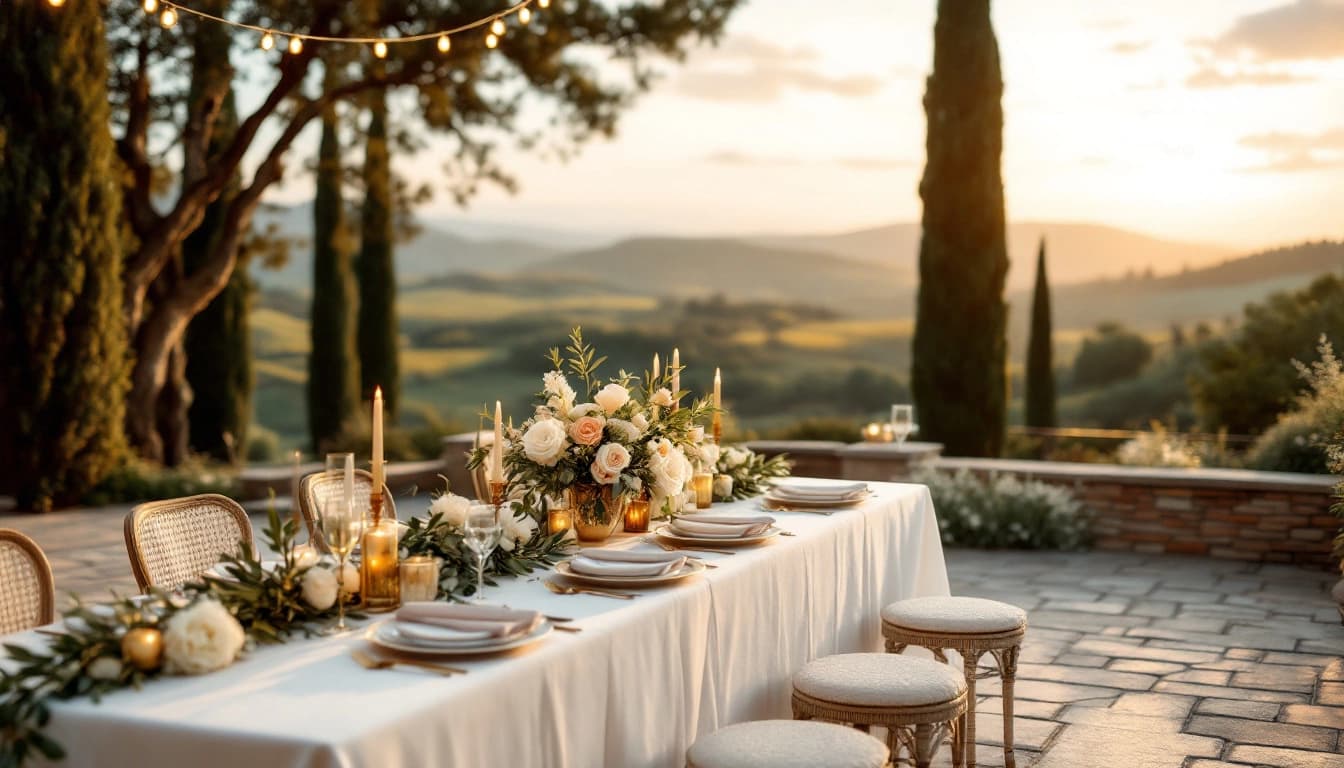
Tuscany is the default for a reason. Rolling vineyards, stone farmhouses, and that warm golden light photographers love. It carries the widest budget range of any region, from intimate agriturismos around €5,000 a day to grand estates above €30,000 a day, so you can find your level here more easily than anywhere else.
Lake Como is the choice for cinematic glamour. Think steep mountains dropping into the water and grand lakeside villas with celebrity history. It is the most prestigious wedding destination in Italy, and the pricing reflects it.
The Amalfi Coast is for couples who want a small, luxurious wedding with jaw-dropping sea views and that Mediterranean atmosphere. The dramatic geography limits guest counts and pushes costs up, which is partly the point.
If those headline regions stretch your budget, the smart move is to look inland and south. Puglia, Umbria, and Le Marche deliver comparable scenery and food at noticeably lower venue rates, without the premium attached to a famous name.
What a Wedding in Italy Costs in 2026
A wedding in Italy for 80 to 100 guests typically lands between €30,000 and €50,000, covering venue, catering, photography, flowers, and a planner. American couples often report €60,000 to €80,000 for a smaller 60 to 80 guest wedding once you fold in travel, accommodation, and the full multi-day program.
Here's where the money tends to go:
Two levers move your total more than anything else. The first is guest count, because catering and bar are charged per head. The second is timing. Booking off-peak, in April to May or late September to October, runs 20 to 30 percent cheaper than the July and August summer crush, and the weather in those shoulder months is arguably better for an outdoor ceremony anyway.
For a fuller picture of how wedding budgets break down by category, our average wedding cost breakdown is a useful companion. A destination wedding shifts the proportions, but the underlying logic holds.
Getting Married in Italy: The Legal Side
Most couples don't realize until they're deep into planning that a legally binding Italian wedding is a real bureaucratic project. You need to gather documents from your home country, have them apostilled and officially translated, submit them through the Italian consulate, and coordinate with the local comune. The process runs three to six months and requires at least one trip to Italy before the wedding itself. Requirements also vary by municipality, so what one town asks for, another won't.
Because of that, most foreign couples take a simpler route. They get legally married at home in a quick civil ceremony, then hold a symbolic ceremony in Italy that carries no legal weight but gives them total creative freedom over the vows, the officiant, and the setting. Nobody at the wedding can tell the difference, and you skip the consulate paperwork entirely.
Cost-wise, a civil ceremony in Italy ranges from €300 to over €5,000 depending on the venue and town. A symbolic ceremony can cost nothing if a friend officiates, or up to €2,000 and beyond if you hire a professional celebrant. The Weddings Abroad Guide is a solid resource for the document specifics if you decide to marry legally on Italian soil.
One practical note: 95 percent of couples getting married in Italy hire a planner, and the legal maze is a big reason. A good local planner handles the bureaucracy, negotiates vendor pricing, and bridges the language gap, which usually saves more than the fee.
The Multi-Day Guest Experience
A destination wedding in Italy is rarely a one-day affair, and this is the part that catches couples off guard. Your guests are flying across an ocean. They expect more than a few hours at a reception, and most venues require a minimum three-day rental anyway. The standard shape looks like this:
- Welcome dinner the evening before, often the whole guest list
- The wedding day itself, ceremony plus reception
- Farewell brunch the morning after, a relaxed send-off

Each of these is a separate event with its own headcount. Not everyone makes the welcome dinner, plenty skip the brunch, and the ceremony is the only one with full attendance. If you're tracking all of that in a spreadsheet, you end up with three columns of "maybe" and no reliable number to give your caterer for any single day.
This is exactly the problem multi-event RSVP solves. Instead of asking guests one yes-or-no question about "the wedding," you let them respond to each event separately. Invyt was built for this: one event page, multiple sub-events, and a dashboard that shows you exactly who's coming to the welcome dinner versus the brunch. When a venue needs final numbers per day, you have them.
Quick takeaway: Budget and plan for three events, not one. The welcome dinner and farewell brunch are part of the deal at an Italian destination wedding, and each needs its own guest count.
Managing an International Guest List
Your guests are spread across countries, time zones, and languages. Paper invitations with mailed reply cards are a bad fit for this, and not because they're old-fashioned. International mail is slow and unreliable, response cards get lost, and chasing replies across continents by phone is its own part-time job.
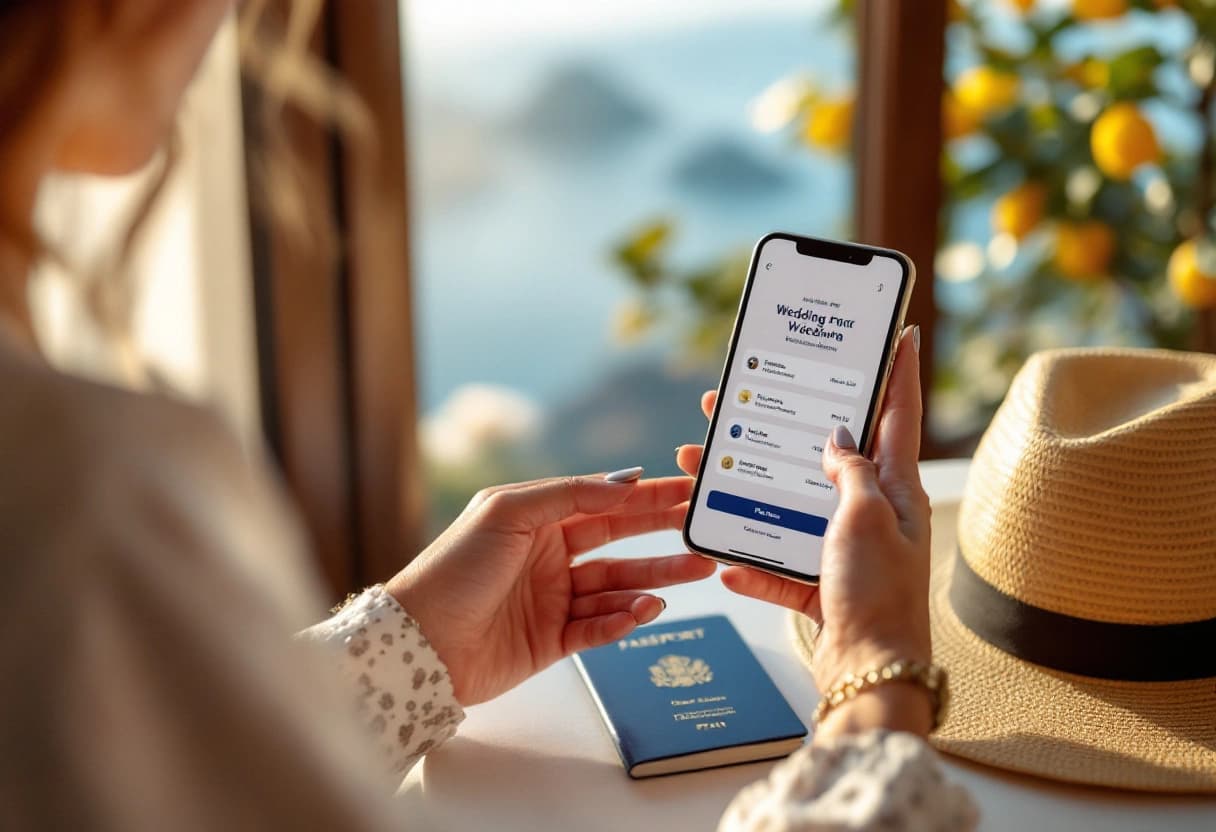
Digital invitations shared over WhatsApp are the practical answer. WhatsApp is how most of the world coordinates, and an invite link drops straight into the family group chat where your guests already are. They tap, they RSVP, and the response lands on your dashboard in real time. No stamps, no transatlantic mail, no guessing.
If your guest list mixes nationalities, multilingual invitations matter too. Sending an Italian or Spanish-speaking branch of the family a page they can read in their own language is a small touch that raises your response rate. Invyt supports bilingual invitations and WhatsApp sharing out of the box, which is the combination that actually fits a cross-border guest list. For the broader mechanics of collecting and tracking responses, the complete guide to online wedding RSVPs walks through the full setup, and our guest list management guide covers how to keep names, plus-ones, and dietary notes organized once replies start coming in. You can also see how it all fits together on our wedding RSVP tracker page.
A Realistic Planning Timeline
The single most important deadline is your venue. The most requested villas on Lake Como and the Amalfi Coast keep waiting lists, and the best planners and photographers get booked a year out. Work backward from 12 to 18 months.
12 to 18 months out: Choose your region, set a rough guest count and budget, hire a planner, and lock the venue and date. Decide now whether you're marrying legally in Italy or doing the symbolic-ceremony route, because the legal path needs a long runway.
9 to 12 months out: Book the core vendors, photographer, florist, catering, music. Send save-the-dates early, since international guests need extra lead time to book flights and request time off.
6 to 9 months out: Send invitations and open your RSVP page. Block hotel rooms for guests and sort out the welcome dinner and farewell brunch venues. If you're handling Italian legal paperwork, start the document apostille and translation process around now.
2 to 3 months out: Chase outstanding RSVPs, confirm per-event headcounts with your caterer, and finalize the seating plan. A guest count that's been tightening in real time on your dashboard makes this stretch far less stressful than waiting on mailed cards. Our month-by-month wedding planning timeline breaks the full sequence down further if you want a complete checklist.
The final weeks: Confirm transport between events, share the schedule with guests, and hand your planner the final numbers.
Start With the Guest List
Almost everything downstream of a destination wedding, the venue size, the catering bill, the three separate headcounts, traces back to your guest list. Getting that right early makes every other decision easier. A digital RSVP page you can share by WhatsApp, that handles your welcome dinner and brunch as separate events, and that shows live counts per day is the difference between a relaxed final month and a frantic one.
Create your free event page on Invyt and set up your welcome dinner, ceremony, and farewell brunch as separate events. It takes a few minutes, and your guest count starts taking care of itself from there.