Invyt.App Team
July 8, 2026
9 min read
How to plan a sangeet from start to finish: guest list, performances, music, timeline, and RSVPs. A practical guide for the wedding's biggest party night.
Planning an event?
Invyt handles your RSVPs so you can focus on the celebration — not the spreadsheet.
Try Invyt free →A sangeet is the music-and-dance night of an Indian wedding, where both families perform choreographed dances, share songs, and celebrate together before the ceremony. To plan one, you lock a date and venue 3 to 4 months out, build a guest list that is usually smaller than the wedding itself, open performance sign-ups early enough for groups to rehearse, and run a tight timeline on the night so the dancing does not eat into dinner or run past the venue's cutoff. That is the whole job. The rest of this guide is how to do each part well.
The sangeet is often the most fun anyone has across the entire wedding, and it is also the event couples underestimate the most. It has its own guest list, its own program, its own catering count, and its own logistics. Treating it as a warm-up to the "real" events is how you end up with 20 people crammed onto a stage during dinner service and half the performances running long. It deserves the same planning attention as the ceremony.
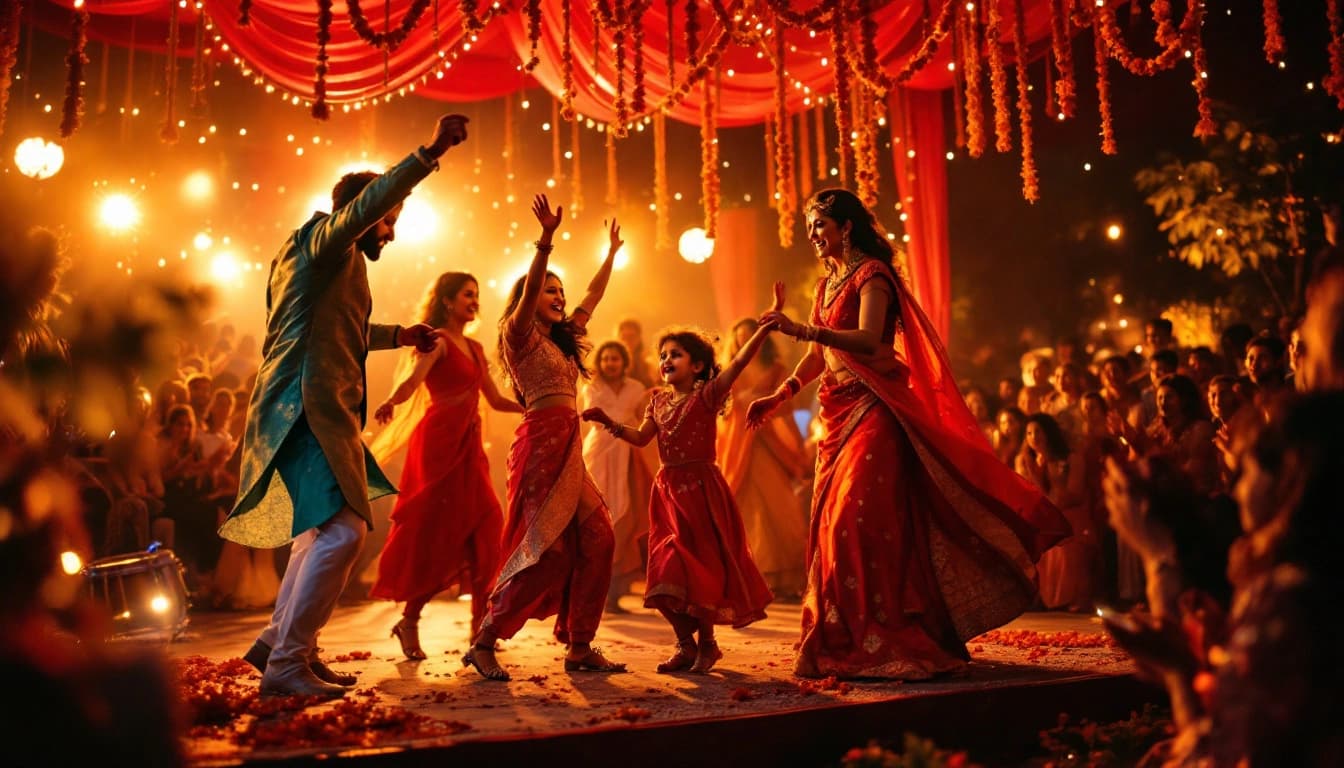
The word sangeet means "sung together." Traditionally it was an intimate evening of folk songs sung by the women of both families, often as part of a longer pre-wedding gathering. The modern sangeet has grown into a full production: a stage, a DJ or live band, choreographed group dances, and a dance floor that stays open until the venue kicks everyone out.
It usually happens one or two nights before the wedding ceremony, though families vary this constantly. In North Indian weddings the sangeet is typically its own dedicated evening. In some families it is folded into the mehndi. Gujarati weddings have the closely related garba and raas. There is no single correct sequence, so the first thing to confirm is where your sangeet sits in the overall schedule, because that drives every other decision.
If you are still mapping out how all your events fit together, our Indian wedding planning checklist lays out the full sequence of ceremonies and when each one typically falls.
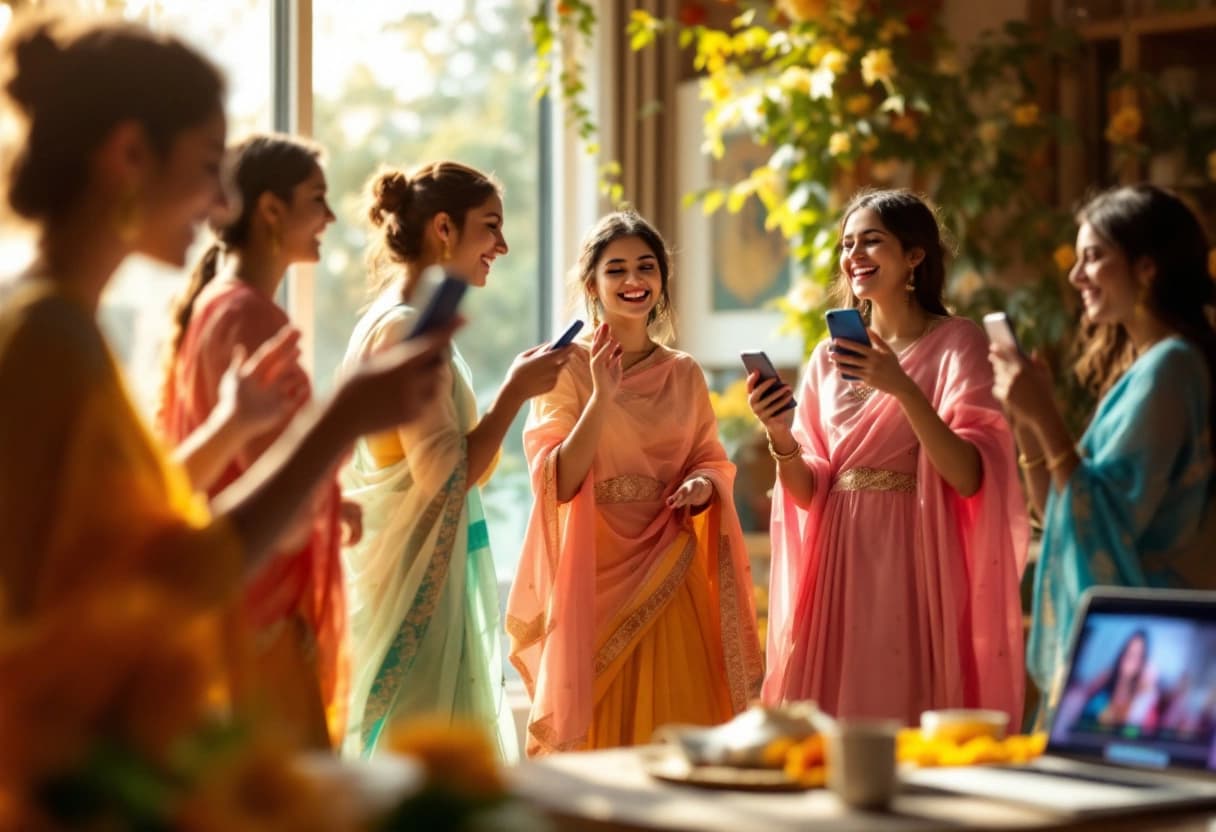
People conflate these two constantly, and it matters for planning because they are different events with different energy.
Many families run them as one combined evening: henna artists working in a lounge area while the dancing happens on the main floor. That works, but be honest about whether you want a calm henna moment or a loud dance party, because trying to force both into the same three hours tends to shortchange one of them.
The sangeet guest list is almost always smaller than the ceremony and reception. This is the mistake couples make most: they assume everyone invited to the wedding is coming to every event, then cater for the full number and blow the budget.
Think of your guest list in tiers. The sangeet tier is the people who make the party: family, the wedding party, close friends, the cousins and college crews who will actually get on the floor and dance. Distant relatives and formal acquaintances who are attending the ceremony do not all need to be at the sangeet, and many would not expect to be.
Get an accurate, separate headcount for the sangeet specifically. Your caterer, your bar order, and your venue capacity all depend on knowing how many people are coming to this event, not the wedding overall. This is exactly where a spreadsheet falls apart, because you end up with one column of names and no reliable way to know who confirmed which night. A tool built for multi-event wedding RSVPs lets guests confirm the sangeet on its own, so your sangeet number is real and not a guess.
Performances are the heart of a sangeet and the single thing that needs the most lead time. Choreography, music edits, and rehearsals cannot be rushed into the final week.
Open performance sign-ups around 10 weeks before the sangeet. Organize acts into groups so the program has variety and rhythm:
A few practical rules keep this from spiraling. Cap each performance at 3 to 4 minutes. Ask every group to submit their song and running order two weeks ahead so the DJ can build a clean playlist with no dead air between acts. Assign one person, not the couple, to be the performance coordinator on the night, herding groups backstage and keeping transitions moving. And decide early whether you are hiring a choreographer. For families where nobody dances, a choreographer running two or three group numbers can be the difference between a real show and five nervous people shuffling on stage.
Keep the total performance block under 90 minutes. This is the number that saves the night. Guests love watching for an hour, and then they want to be on the floor themselves. A two-hour performance marathon is where energy dies.
Your DJ or band is the backbone of the evening, doing three jobs: playing the performance tracks on cue, filling transitions, and running the open dance floor once the program ends.
Brief them properly. Send the full performance running order with the exact audio files, note the language and regional mix your crowd wants (Punjabi bhangra, Bollywood, folk, and Western pop often all appear in one night), and flag any songs that are off-limits. A live dhol player for the opening or the baraat-style entrance adds a lot of energy for a relatively small cost, and it is one of the most requested add-ons at South Asian weddings.
For the open-dancing portion, give the DJ a short "must-play" list and a shorter "do-not-play" list, then let them read the room. Micromanaging every song from the dance floor never works.
A sangeet runs about 4 to 5 hours. Here is a timeline that keeps the night moving without feeling rushed:
Serve dinner before the performances, not after. Once the dance floor opens, nobody wants to stop for a plated meal, and food sitting out during two hours of dancing gets sad. Feed people first, entertain them second, then let them dance it off.
Build in a 15-minute buffer somewhere. Something always runs long: a group is missing a member, a track does not play, someone insists on an encore. A little slack in the schedule absorbs it.
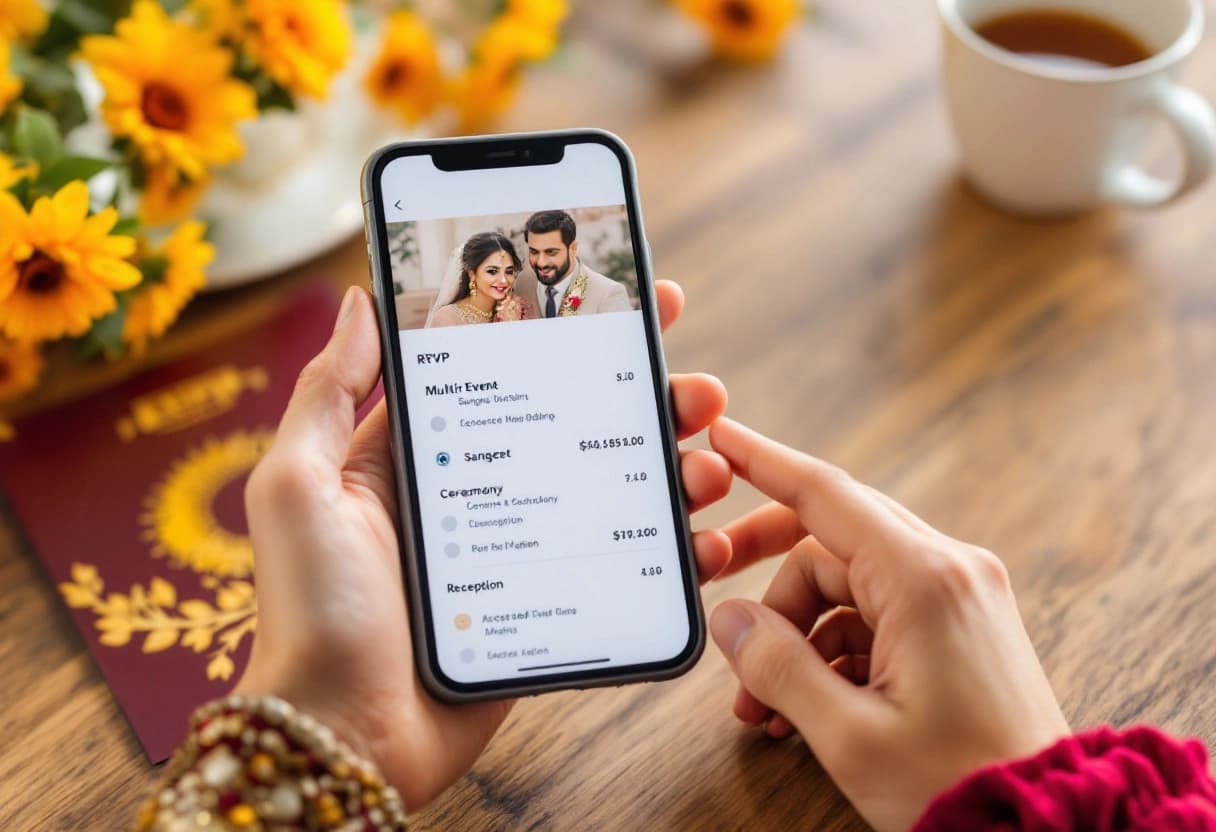
Because the sangeet has its own guest list, it needs its own clear invitation and its own RSVP, even when it shares a wedding weekend with the other events.
Spell out the specifics guests actually need: date, start time, venue, dress code, and whether children are welcome. Dress code matters more here than people expect, because "festive Indian attire" versus "cocktail" versus "come ready to dance" genuinely changes what guests wear. If you want vibrant lehengas and kurtas rather than formal wedding wear, say so directly on the invite.
Send sangeet invitations about 6 weeks out, and collect RSVPs digitally so your headcount updates in real time. If you are sharing invites over WhatsApp, which most diaspora families do, a link that opens straight to an RSVP page beats a paper card that someone has to remember to respond to. For wording that respects the tradition while staying clear, our guide to Hindu wedding invitation wording has templates you can adapt for the sangeet specifically.
Invyt's free Indian wedding planner lets you set up a multi-event page where the sangeet, ceremony, and reception each have their own RSVP, so guests confirm exactly which events they are attending and you get a clean per-event count. Create your event at Invyt and share the link over WhatsApp in a couple of minutes.
A few patterns come up again and again:
Handle those six and the rest tends to fall into place. A sangeet is forgiving, because the whole point is people dancing together, and that happens almost on its own once the room is warm.
Ready to organize your sangeet and the rest of your wedding events in one place? Create your free event page on Invyt, add a separate RSVP for the sangeet, ceremony, and reception, and share it over WhatsApp so every guest confirms exactly which nights they are coming.
Start 3 to 4 months out. Lock the venue and date first, open performance sign-ups around the 10-week mark so groups have time to rehearse, and send invitations 6 weeks ahead. Choreography and music selection need the most lead time, so those two are the first things to move on.
Most sangeets run 4 to 5 hours: an hour of arrivals and dinner, 60 to 90 minutes of performances, then open dancing until the end. Keep the performance block under 90 minutes total. Past that, guests lose energy and the open-floor dancing that everyone actually remembers gets cut short.
Yes. The sangeet usually has a smaller guest list than the ceremony or reception, and you need a separate headcount for catering, seating, and venue capacity. Use a multi-event RSVP so guests confirm the sangeet on its own, rather than assuming everyone invited to the wedding is coming to every event.
The mehndi is a henna ceremony, usually calmer and often women-centered, where the bride's henna is applied. The sangeet is a music-and-dance night for both families. Some families combine them into one evening, but they serve different purposes and increasingly happen as separate events.
Family and close friends, organized into groups: the bride's side, the groom's side, cousins, college friends, sometimes the parents. Couples often close with their own performance. Many families also hire a choreographer or a live dhol player and DJ to anchor the night around the amateur performances.
Indian weddings span 5-7 events across multiple days. This checklist covers every ceremony, plus how to manage a guest list when different people attend different events.
Indian weddings have five, sometimes seven, separate events, each with a different guest list. Here's how to manage RSVPs across every ceremony without losing track.
Copy-ready wording for every Hindu wedding ceremony: Haldi, Mehndi, Sangeet, Baraat, and reception. Formal, casual, and bilingual examples for diaspora couples.
Join thousands of event organizers who trust Invyt for seamless guest list management
Get Started Free