Invyt.App Team
July 1, 2026
9 min read
A practical, step-by-step guide to planning your Nikah, from choosing the date and booking the imam to managing Walima RSVPs and multi-event guest lists.
Planning an event?
Invyt handles your RSVPs so you can focus on the celebration — not the spreadsheet.
Try Invyt free →Planning a Nikah comes down to five moving parts: the contract, the officiant, the date, the venues, and the guest list. Get those five in order and the rest, the decor, the food, the outfits, falls into place around them. This guide walks through each one in the order that actually works, plus a full checklist and timeline you can follow.
A quick distinction first, because it shapes everything else. The Nikah is the religious marriage contract, the ceremony where the marriage becomes official. The wedding is the wider celebration that can wrap around it: a Mehndi Night, the Walima reception, sometimes a Baraat. You can have a Nikah with nothing but two witnesses and a signed contract, or a Nikah that anchors three days of events. Deciding which one you're planning is step zero.
Quick summary: Lock your officiant and venue first, set the date around family and the Islamic calendar, then build one guest list you can slice per event. Plan your Nikah and Walima on Invyt with separate RSVPs for each function.
Before the planning, the essentials. A Nikah is valid when these are present:
Everything past this list is celebration, not requirement. That's worth remembering when the planning starts to feel heavy. The marriage itself is simple. The party is where the complexity lives.
These two have the longest lead times, so they come first even though they feel less exciting than picking a color palette.
The officiant. If you want a specific imam or a particular mosque, ask early. Popular imams in busy communities book out months ahead, especially on Fridays and through the spring and summer wedding season. Confirm whether they'll travel to a venue or whether the Nikah has to happen at the mosque. Ask what paperwork they need and whether they handle the legal marriage registration or whether that's a separate civil step you arrange yourself. In the UK and US, the religious Nikah and the legal marriage are often two different acts, and assuming they're one is a common, stressful mistake.
The venues. A Muslim wedding can mean more than one space. The Nikah might be at a mosque or Islamic centre. The Walima reception usually needs a banquet hall or restaurant that can cater a large seated dinner. A Mehndi Night often happens at a family home or a smaller hall. Figure out how many venues you need before you start booking, because each one has its own deposit, its own calendar, and its own capacity limit.
Two calendars matter here: the Islamic one and your family's.
On the Islamic side, a few guidelines shape a good date:
On the family side, the real constraint is people. A Nikah is a gathering of two families, and the guests who matter most, grandparents, close relatives travelling from abroad, the officiant, tend to have the least flexibility. Pick a date that works for the small handful of people the day can't happen without, then let everyone else fit around it.
Now decide the shape of the celebration. A diaspora Muslim wedding commonly includes some mix of:
You don't need all of these. A small Nikah plus a Walima is a complete, beautiful wedding. But if you're doing three or four functions, the guest lists start to diverge, and that's where planning gets genuinely fiddly. Your Mehndi crowd isn't your Walima crowd. The women-only events have their own list. Keeping these straight in your head, or worse, across four spreadsheets, is where most couples lose the plot. For the broader multi-day arc, our Indian wedding planning checklist covers the extended-family logistics in depth, and the general wedding planning timeline maps out how far ahead each task should sit.
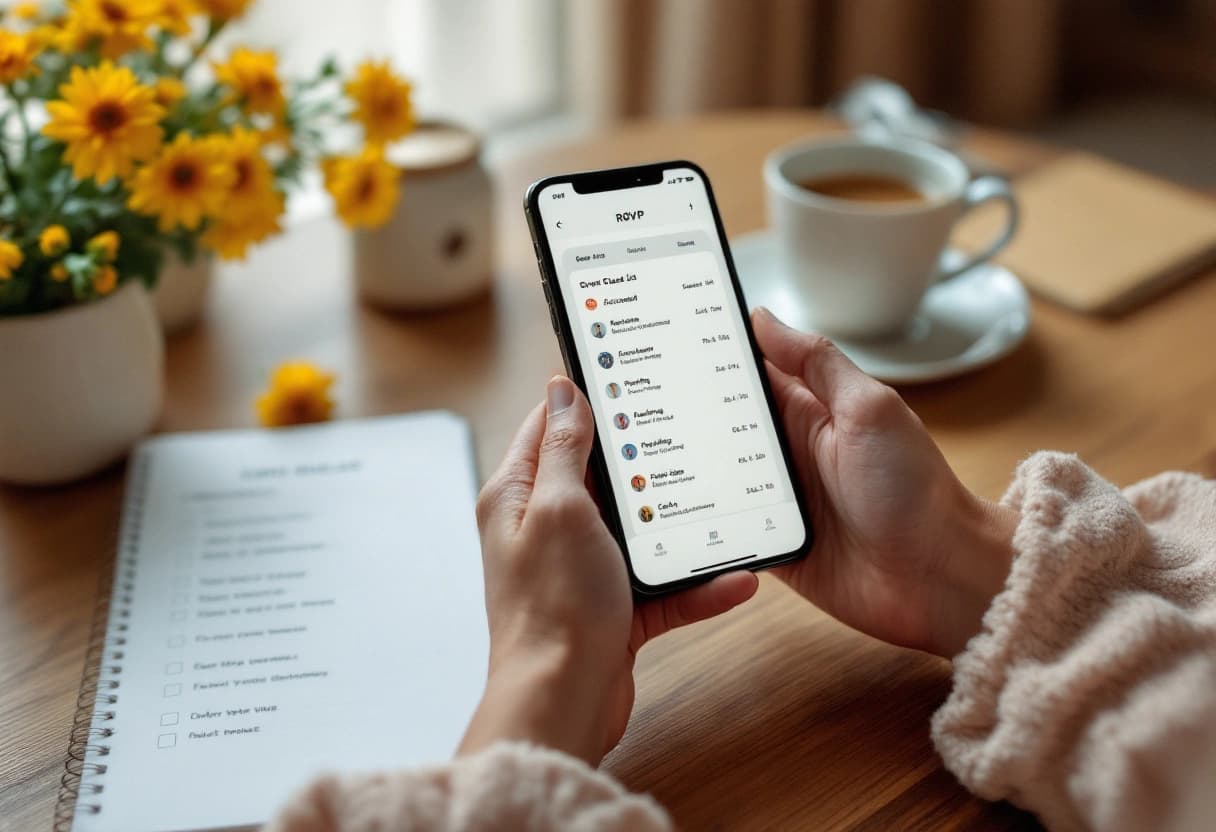
Here's the part generic wedding advice gets wrong for a Nikah. Most tools assume one event, one guest list, one headcount. A Muslim wedding rarely works that way.
Build a single master list of everyone across all your families, then tag who's invited to what. Auntie from Lahore comes to the Walima but not the Mehndi. Your university friends come to the Nikah and Walima. The women-only Mehndi has its own count. When you think of it as one list with per-event invitations rather than four separate lists, the whole thing gets manageable.
This is exactly what a purpose-built Nikah planner handles. You set up each function once, and guests RSVP to the events they're invited to from a single shared link. You get a live, separate headcount for the Nikah, the Walima, and the Mehndi without reconciling anything by hand. For the mechanics of digital RSVPs generally, the complete guide to online wedding RSVPs walks through how the responses flow in.
A few things to collect on the RSVP form while you're at it:
If you're tracking a large Walima, a live RSVP tracker that updates as responses arrive beats refreshing a spreadsheet the week before.
With the structure locked, the rest is decoration in the literal and figurative sense. In rough priority:
Catering. For the Walima especially, this is your biggest expense and the thing guests remember. Book a halal caterer once you have a rough headcount from your early RSVPs. Confirm they can handle your final numbers, which is another reason a live guest count matters.
Invitations. Digital invitations shared over WhatsApp have quietly become the norm in diaspora communities, and for good reason: they reach the whole family group instantly, they're free, and they carry a live RSVP link. A printed card for the grandparents plus a digital invite for everyone else is a common, sensible split.
Outfits and mehndi. The bride's outfit and mehndi artist book up in season, so these sit earlier than you'd think if you have specific people in mind.
Decor, photography, transport. Real, but flexible. These flex to your budget without threatening the date.
Here's the whole thing as a timeline, assuming a Nikah with a Walima and a Mehndi Night. Compress it for a smaller celebration.
The single biggest source of stress on this timeline is the guest count moving under you, RSVPs trickling in late, plus-ones appearing, one event's list bleeding into another's. Solve that early and the rest of the planning stays light.
Planning a Nikah is really an exercise in getting five things right and letting everything else follow. Lock the officiant and venues, set a date that respects the calendar and the family, map your events, and build one guest list you can slice per function. Do that, and the celebration takes care of itself.
Ready to organise it in one place? Set up your Nikah and Walima on Invyt and let guests RSVP to each event from a single link.
For a Nikah with a Walima and a Mehndi Night, start three to six months out. A small Nikah ceremony with close family can come together in four to six weeks. The longest lead times are the venue and the imam or officiant, so lock those first.
The core requirements are the consent of both the bride and groom, two adult Muslim witnesses, the mahr (a gift from the groom to the bride), an offer and acceptance (ijab and qabul), and someone to conduct the ceremony. Everything else, from the venue to the decor, is celebration, not requirement.
Among UK, US, and Canadian diaspora families, same-day is now the dominant pattern: the Nikah in the afternoon and the Walima reception in the evening. The classical tradition holds the Walima the day after, but that has become the minority choice in the diaspora.
A Muslim wedding often spans several events, each with a different guest list. Mehndi Night may be women-only, the Nikah close family, and the Walima the full circle. A digital RSVP tool that lets guests respond per event, like Invyt, keeps each headcount separate without a stack of spreadsheets.
Most families avoid Muharram, a sacred month of mourning, particularly its first ten days, which include Ashura. Large Walima celebrations are also generally held outside Ramadan. Shawwal, the month after Ramadan, is considered especially blessed for marriage.
Indian weddings span 5-7 events across multiple days. This checklist covers every ceremony, plus how to manage a guest list when different people attend different events.
Most couples have 12–18 months between engagement and wedding day. Here's how to use every month well: specific tasks, real deadlines, no filler.
Online wedding RSVPs save you hundreds of dollars on paper cards, give you real-time attendance tracking, and spare your guests the stamp hunt. Here's how to set one up the right way.
Join thousands of event organizers who trust Invyt for seamless guest list management
Get Started Free