Invyt.App Team
May 15, 2026
8 min read
Digital wedding invitations cost a fraction of paper, get RSVPs faster, and handle international guest lists with ease. Here's how to do it right.
Planning an event?
Invyt handles your RSVPs so you can focus on the celebration — not the spreadsheet.
Try Invyt free →Digital wedding invitations let your guests confirm attendance on a web page. No paper, no postage, no waiting for envelopes to arrive. You create an event page, add your guest details, and share a link by email, WhatsApp, text, or QR code. Responses come in automatically, organized in a dashboard you can check from your phone.
Over 70% of couples now use digital invitations in some form, according to recent wedding industry surveys. About 30% go fully digital; the rest use a mix of printed and online. If you're considering the switch, here's what actually matters.
The savings are real.
A set of 150 printed wedding invitations (including envelopes, RSVP cards, and postage both ways) typically costs between $750 and $2,250, depending on print quality and design. That doesn't count the time spent addressing envelopes or follow-up postage when guests need replacements.
Digital invitations on platforms like Invyt cost $0 for the invitation itself. The only potential cost is an optional premium tier for very large events. For most couples, the savings run $300-800 with no meaningful trade-off in the result.
The most common hesitation: "Will guests think we're cutting corners?"
Formality comes from design, not format. A digital invitation with an elegant serif font, a restrained color palette, and carefully chosen wording reads exactly as formal as an engraved card. Emily Post's etiquette guidance has shifted considerably over the past decade, and digital invitations are now considered appropriate for weddings at any formality level.
If you're worried about specific guests (grandparents, older relatives less comfortable online), the hybrid approach described below addresses that without compromising your overall setup.
The process is more manageable than most couples expect:
No waiting by the mailbox. No decoding illegible handwriting on returned cards. No spreadsheet to update every time someone messages you.
This is where the numbers are clearest.
Paper invitations average 30-40% RSVP responses within the first week. Digital invitations achieve 60-70% in the same window. Research from WedSites found that 35-45% of paper RSVP cards are simply never returned, leaving couples chasing responses for weeks before the caterer needs a headcount.
The practical result: your confirmed guest count comes in faster and more completely with digital RSVPs. That matters directly for venue minimums, catering numbers, and seating plans.

Going fully digital doesn't work for every guest list, and there's no requirement to choose one or the other.
The most practical hybrid: send printed cards to guests who need them, with a QR code that links directly to your digital RSVP page. Making one is a five-minute job — how to create a QR code for wedding RSVPs covers it free, or you can generate one straight away with the event QR code generator. Guests comfortable online scan the code and respond. Guests who prefer calling can phone you. You manage everything in one dashboard regardless of how each response came in.
This works well for multi-generational weddings where some guests are fully online and others have never used a smartphone. The printed card isn't wasted. It becomes the on-ramp to your digital tracking.
Paper invitations get complicated when your guest list spans multiple countries. International postage is expensive and slow. Delivery times vary enough that some guests receive invitations weeks after others. For multi-event weddings (ceremony, reception, mehndi, sangeet, after-party), managing separate paper invitations for each event is genuinely unworkable.
Digital invitations solve this. A WhatsApp message with your invitation link reaches a cousin in Mumbai and a childhood friend in Toronto simultaneously. No postage tiers, no lost mail, no wondering whether the card arrived.
For multi-event weddings specifically, platforms built for this make a meaningful difference. Invyt lets guests RSVP to individual events from one page, so a guest attending the ceremony and reception but not the sangeet can indicate that clearly. You see per-event attendance rather than a vague "attending." No platform designed for simple single-event weddings handles this well.
Sending invitations via WhatsApp is standard practice for communities in South Asia, Latin America, and the Middle East where WhatsApp is the primary messaging platform. Dropping your invitation link in a family group chat reaches dozens of people at once and sparks immediate responses.
Not all platforms are equal. The things that matter in practice:
Real guest management, not just design. Pretty templates mean nothing if you can't see who responded, who hasn't, and each guest's dietary requirements in one place. Look for an actual guest list view, not just a stream of email notifications.
Proper plus-one handling. Many platforms fall short here. You need to designate specific guests as plus-one eligible and collect plus-one names before your caterer needs the headcount.
Automatic reminders. Manually chasing non-responders is exhausting. A platform that sends reminders to guests who haven't responded by your deadline saves hours of awkward follow-up texts.
Multiple sharing channels. Email isn't how everyone communicates. A useful platform generates a link you can send via WhatsApp, text, email, or print as a QR code.
No ads on your invitation page. Some free platforms display advertising to your guests as a trade-off. That's reasonable for a casual party; it's not appropriate for a wedding.
Invyt covers all of these on the free tier. You can set up your invitation and RSVP tracking without a credit card.
The text on your invitation matters as much for digital as for paper. Formal vs. casual tone, how you handle plus-ones, dress code language. All of it still applies.
For specific templates across formal, semi-formal, and casual styles, the wedding invitation wording guide has 30+ examples you can adapt directly.
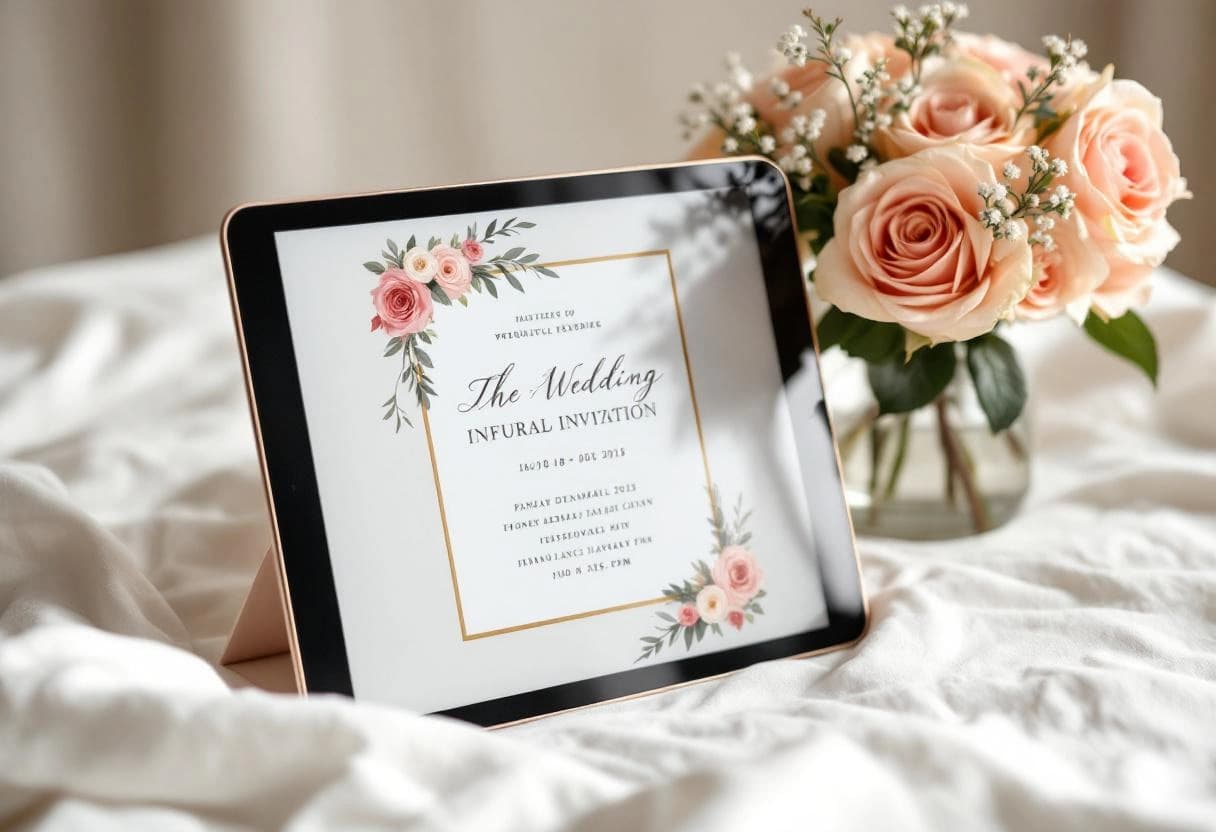
One thing worth noting for digital: your RSVP deadline should be clearly visible on the invitation itself. Digital invitations make it easy to display the deadline prominently, and guests are less likely to miss it than when it's tucked into the body of a paper card.
Timing stays the same whether you go digital or paper:
For destination weddings where guests need to book travel, send invitations 3-4 months out.
Digital invitations make it easy to send in waves as your guest list firms up. You can send a first batch, monitor responses, and add guests as spots open, without reprinting anything or worrying about matching paper stock.
The biggest practical difference between digital and paper RSVPs isn't speed. It's data quality.
Paper RSVP cards create constant interpretation problems. Guests return cards without writing names. They mark "attending" without specifying which events. They send one card for a household but don't clarify whether both people are coming to the ceremony. You spend the two weeks before your wedding decoding ambiguous responses.
Digital RSVP forms collect exactly the information you ask for, field by field. If you need dietary requirements, you add a required field. If you need each guest's name individually, the form collects that. Guests can't submit without completing required fields, so the data you get is clean and immediately usable.
Couples who switch from paper to digital notice this first and most. The complete guide to online wedding RSVPs covers how to structure your form to collect clean data from the start.
Digital wedding invitations cost less, get faster responses, and give you cleaner data. The formality concern is largely settled: the design signals the tone, not the format. For international guest lists or multi-event weddings, the case for going digital is hard to argue with.
Create your invitation page at invyt.app. Setup takes about 5 minutes, and everything most couples need is on the free tier.
No. Etiquette guidelines have shifted considerably over the past decade. Digital wedding invitations are now widely accepted for all formality levels. The design, not the format, signals the tone of your wedding. A beautifully designed digital invite reads as formal as any engraved paper card.
Paper wedding invitations cost $5-15 per invite including envelopes, postage, and RSVP return cards. For 150 guests, that's $750-2,250 total. Digital invitations on platforms like Invyt are free, making the savings significant for most couples.
Yes. Digital invitations typically achieve 60-70% RSVP responses within the first week. Paper cards average 30-40% in the same window, and research suggests 35-45% of paper RSVP cards are never returned at all.
Send digital invitations to tech-comfortable guests and follow up by phone or mail for older relatives. Many couples use a hybrid approach: printed cards with a QR code linking to the digital RSVP page, so every guest has a workable option.
Yes. Platforms like Invyt generate a shareable link you can send via WhatsApp, text message, or any messaging app. This works especially well for international guests and communities where WhatsApp is the primary communication channel.
A QR code for wedding RSVPs takes about three minutes to make and costs nothing. Here are the exact print sizes, placement rules, and the testing steps that stop a reprint.
Nearly half of couples now include QR codes on their wedding invitations. Here's how to size them, what to link to, and the mistakes that cost you RSVPs.
From black-tie formal to barefoot-at-the-beach casual, 60+ copy-ready wedding invitation wording examples for every style, plus tips for tricky scenarios.
Join thousands of event organizers who trust Invyt for seamless guest list management
Get Started Free