Invyt.App Team
April 3, 2026
15 min read
Complete Indian wedding planning checklist: mehndi, sangeet, haldi, baraat, ceremony, reception. How to manage RSVPs across every event.
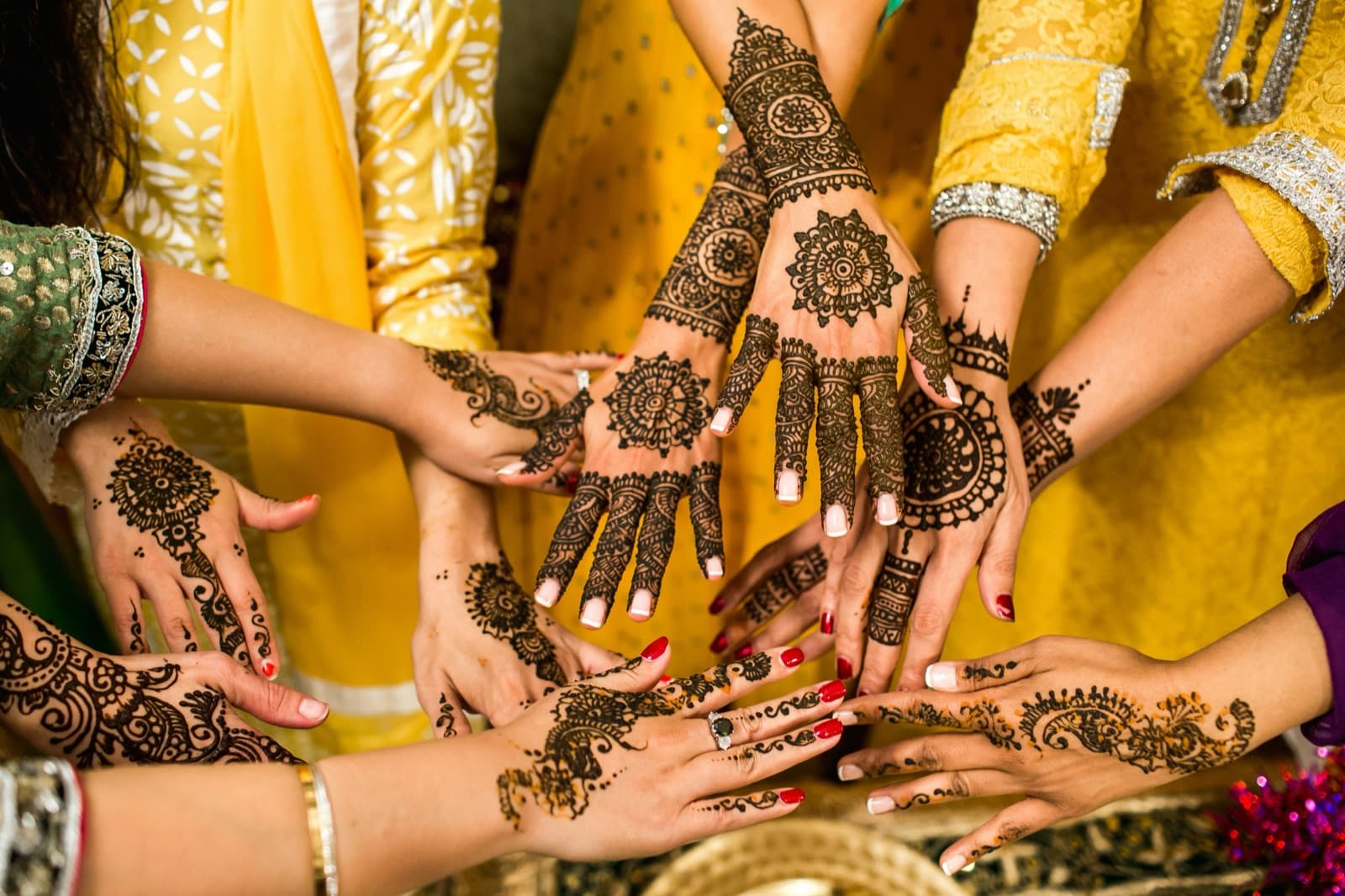
Photo by Pexels
Planning an event?
Invyt handles your RSVPs so you can focus on the celebration — not the spreadsheet.
Try Invyt free →The biggest logistical challenge of an Indian wedding isn't the budget or the decor. It's the guest list. Specifically, the fact that different people attend different events, and keeping track of who's coming to which ceremony is something no spreadsheet handles gracefully.
A typical North Indian wedding runs across 5-7 events over 2-4 days. South Indian weddings have their own distinct ceremonies. Muslim weddings include the Nikah, Walima, Dholki, and Mehndi. Each event has its own guest list: immediate family and close friends for the Haldi, extended family for the Sangeet, everyone for the Reception. That's potentially five separate headcounts, five separate dietary requirements, five separate venue capacities to manage.
Scale adds to the complexity. Indian weddings in India average 300-500 guests; diaspora weddings in the US and UK tend to run 150-250 where venue costs apply pressure. The Indian wedding industry is valued at approximately $50 billion annually, which reflects the fact that these aren't simple celebrations. South Asian couples in the US spend on average 40% more than the national wedding average, according to The Knot's real weddings research. A multi-day, multi-event celebration explains a lot of that number.
This checklist covers every ceremony in order, what each one involves, and (critically) how to manage the RSVPs so you know exactly who is attending what.
Before the ceremony-by-ceremony breakdown, here's the typical sequence for a North Indian wedding. Exact timing varies by family, region, and whether ceremonies are combined or spread across multiple days.
South Indian weddings follow a different structure: the Nischayathartham (engagement), Pellikoduku and Pellikuturu (pre-wedding rituals for groom and bride respectively), and the main ceremony (Muhurtham) each differ significantly from North Indian traditions. Regional variation is the norm, not the exception.
Lock the dates first. This sounds obvious, but Indian weddings require checking multiple calendars. The Hindu panchang (almanac) determines auspicious dates (shubh muhurtas) for the ceremony. If your family observes this, work with a pandit to identify good dates before booking anything else. Auspicious dates in peak wedding season (November-February, April-May) book out fast.
Set your approximate guest count. Indian weddings average 200-400 guests for the main events, with some families exceeding 500. The full headcount affects venue capacity, catering costs, invitation quantity: everything downstream. Even a rough number (150 vs 350) determines which venues are even worth visiting.
Decide which ceremonies you're hosting. Not every wedding includes all seven events. Some families combine the Mehendi and Sangeet into one evening. Some skip the formal Roka. Others add events specific to their community or region. Decide this early, as it affects your total budget and your coordination across venues and vendors.
Establish two guest lists. You'll need a complete master list (everyone invited to anything) and sub-lists per event. Most families maintain these in a spreadsheet, but this gets unwieldy fast when you're dealing with 300 people across five events. Our wedding guest list management guide covers how to structure this before you start adding names. More on the multi-event challenge below.
Book the big vendors in this order:
For smaller events (Mehendi, Sangeet, Haldi), venues can often be booked 4-6 months out unless you need a specific restaurant or hall.
This is where Indian wedding planning diverges sharply from the guidance you'll find on mainstream wedding planning sites. Those sites assume one event, one guest list, one RSVP round. That's not this.
Build the master list first. Every person who might be invited to any event goes on this list. Include: name, relationship, contact information (phone/WhatsApp preferred for diaspora families), and which events they're invited to.
Segment by event. Create a column or sub-list for each ceremony:
A family of 250 wedding guests might have 50 at the Haldi, 120 at the Mehendi, 200 at the Sangeet, 250 at the ceremony, and 300 at the reception (with additional colleagues and acquaintances added for the reception).
Decide on plus-ones and children policy per event. Some families allow children at the Sangeet but not the Haldi. Some events are adults-only by practical necessity (late evening, specific venue). Be explicit in invitations about this.
Use a digital RSVP system. Managing per-event RSVPs via WhatsApp messages, text threads, and spreadsheet updates is how you end up with wrong headcounts and catering shortfalls. A platform like Invyt's Indian wedding planning hub handles multi-event RSVPs natively: you create each ceremony as a separate event, guests indicate which they're attending, and you get live headcounts per event in one dashboard.
This matters especially for diaspora families where guests are flying in from multiple countries and attending different subsets of events based on their travel itinerary.
The formal engagement, though many families treat it separately. The Roka is the families' official acknowledgment of the match; the Sagai (ring ceremony) is the formal exchange of rings. Guest list is usually 20-50 people (immediate family only).
Planning notes: Typically held at the bride's home or a small venue. Light meal or sweets served. Low planning complexity, but it marks the official start of the wedding timeline so every vendor relationship begins from here.
The henna ceremony. The bride gets intricate mehndi applied to her hands and feet by a professional artist; female guests often get small designs done too.
Invitations: The Mehendi invitation typically goes to the bride's female family and friends plus close female friends of the groom's family. Many modern couples invite men as well. This varies by family preference.
Planning notes:
RSVP consideration: Because Mehendi guests are a subset of the overall list, you need a separate RSVP or a multi-event RSVP where guests indicate which events they'll attend.
The music and dance night. Families perform choreographed dances, there's live or DJ music, and it's often the most festive evening of the wedding. The Sangeet can run 4-6 hours and feel closer to a concert than a dinner.
Invitations: Extended family and friends of both families. This is often a larger guest list than the ceremony itself for some families.
Planning notes:
The turmeric ceremony. Close family members apply a paste of turmeric, sandalwood, and rose water to the bride and groom (in separate ceremonies at their respective homes or together, depending on family tradition). The yellow paste is believed to bless and beautify the couple before the wedding.
Guest list: Intimate. Typically 20-60 people, immediate family and closest friends.
Planning notes:
The groom's procession. The groom arrives at the wedding venue on a decorated horse (or sometimes an elephant, or a classic car) accompanied by his family and friends dancing to dhol drummers. The baraat is often the most visually striking part of the wedding day.
Planning notes:
The religious ceremony. For Hindu weddings, the Pheras (seven sacred circles around the sacred fire) are the central ritual; for Muslim weddings, the Nikah (marriage contract) is the ceremony. The ceremony length varies significantly: Hindu Pheras can run 1.5-3 hours; Nikah ceremonies are often shorter.
Planning notes:
The celebration dinner. Usually the largest event in terms of guest count, the reception is also the most familiar to Western guests. Food, music, toasts, dancing.
Planning notes:
Send save-the-dates 6 months out for guests traveling from abroad or out of state. International diaspora families often need this lead time to book flights.
Send formal invitations 6-8 weeks before the wedding. For Indian weddings, many families send physical invitations (a tradition with real cultural weight) as well as digital invitations for international guests or as a supplement.
For multi-event invitations, the invitation typically lists all events the recipient is invited to. The alternative is separate invitation cards per event, which gets expensive for 200+ guests.
Digital RSVP for multi-event: If you want guests to indicate per-event attendance (especially useful for out-of-town guests who may only attend some events), a digital RSVP is the practical solution. Set up each ceremony as an event on Invyt, share a single link, and guests check off which events they'll attend. You get live headcounts per ceremony as responses come in. For wording examples to include in your invitations for each event, see our wedding RSVP wording examples, including templates specifically for multi-event invitations. For a step-by-step guide on setting up separate RSVPs for ceremony and reception specifically, managing separate RSVPs for ceremony and reception covers the full setup process.
This is especially useful for:
This is the piece that breaks most spreadsheets.
You have 280 guests total. 50 come to the Haldi. 140 to the Mehendi. 200 to the Sangeet. 280 to the ceremony. 310 to the reception (you added some colleagues). That's five separate headcounts, five separate RSVPs to track, five separate dietary breakdowns for catering.
In a spreadsheet, this looks like five tabs or a very wide sheet with one row per guest and binary yes/no columns per event. It works until someone changes their RSVP. Then you're manually updating multiple cells and hoping nothing falls out of sync.
A multi-event RSVP platform solves this structurally. Invyt lets you create each ceremony as a linked event. Guests respond once and indicate which events they'll attend. The dashboard shows headcounts per event, dietary breakdowns per event, and pending RSVPs, all from one view.
For Indian weddings with 5+ ceremonies and guests split across events by family proximity, this is the difference between a calm RSVP process and a chaotic one.
Everything above describes a broadly North Indian Hindu wedding. If your wedding is:
No single checklist covers every South Asian wedding. If your family has specific regional traditions, the pandit, maulvi, or senior family members are the authoritative source. This checklist gives you the structural framework; adapt it to your specific traditions.
For background on what Indian weddings look like to vendors and venues (useful context when negotiating budgets), KPMG and ASSOCHAM's joint research on the Indian wedding industry and The Knot's Real Weddings Study are the two most-cited sources. Both are worth a read if you're planning a budget conversation.
12-18 months out:
9-12 months out:
6-9 months out:
4-6 months out:
6-8 weeks out:
2-3 weeks out:
North Indian Hindu weddings typically include 5-7 events: Roka/Sagai, Mehendi, Sangeet, Haldi, Baraat, the religious ceremony, and Reception. Not all couples host every event. Many combine or skip based on family preference, budget, and logistics.
Build a master guest list with columns for each event. Guests RSVP with per-event attendance, either via a multi-event RSVP form (the easiest option) or by manually tracking who confirmed for each ceremony. A platform like Invyt handles multi-event RSVPs in one place, with separate live headcounts per event.
Send save-the-dates 6 months in advance for guests traveling internationally. Send formal invitations 6-8 weeks before the wedding. Set the RSVP deadline 3 weeks before your first event.
Indian weddings in India average 300-500 guests across all events. Diaspora weddings in the US and UK tend to run 150-250 where venue costs constrain size. Guest counts vary dramatically by event: the Haldi is typically the most intimate (20-60 people), the Sangeet draws extended family (100-250+), and the reception is usually the largest. Many couples see a 40-50% drop between their total invite list and any single ceremony's guest count.
South Asian weddings in the US typically cost $50,000-$150,000 for a multi-day, multi-event celebration. South Asian couples spend on average 40% more than the US national wedding average (~$35,000). Multi-venue, multi-event logistics and the expectation of elaborate decor, catering, and professional photography at each event drive that premium.
Collect dietary information once (during RSVP) and apply it across events. Common restrictions in South Asian weddings include vegetarian, vegan, Jain (no root vegetables), gluten-free, and halal requirements. A digital RSVP lets you collect this per guest and export it per event for each caterer.
Copy-ready wording for every Hindu wedding ceremony: Haldi, Mehndi, Sangeet, Baraat, and reception. Formal, casual, and bilingual examples for diaspora couples.
Indian weddings have five, sometimes seven, separate events, each with a different guest list. Here's how to manage RSVPs across every ceremony without losing track.
Join thousands of event organizers who trust Invyt for seamless guest list management
Get Started Free